
Social Work Programs offered at Ana G. Mendez University
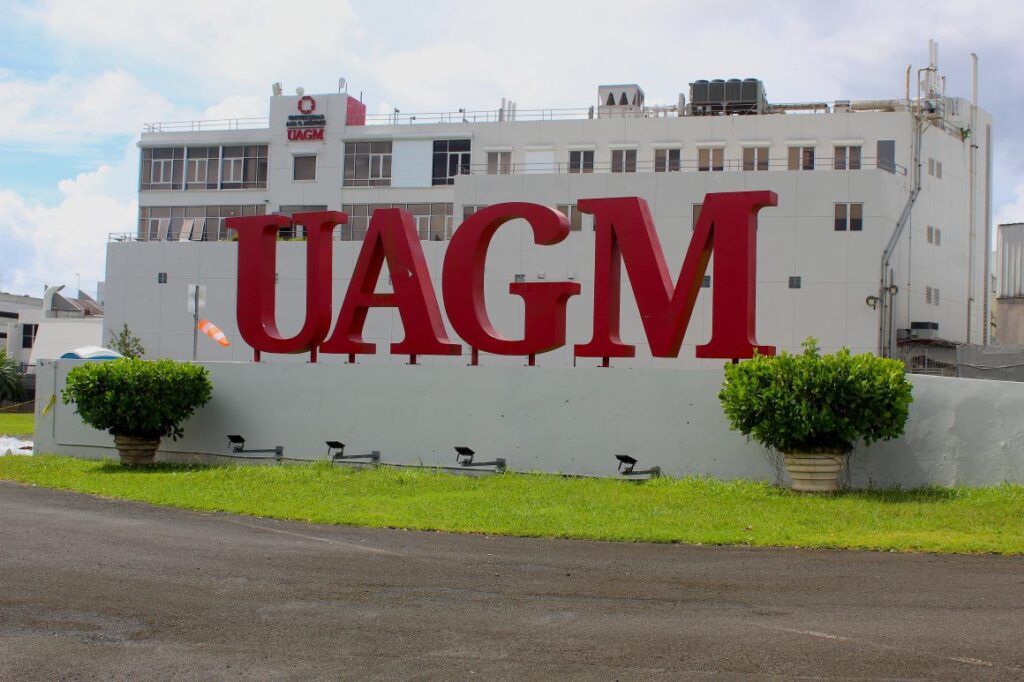
Ana G. Méndez University (AGMU), a prestigious private, non-profit institution of higher education, opened its doors in 1949. The university’s 74-year legacy began when educator Ana G. Méndez started Puerto Rico Junior College to create more postsecondary opportunities after World War II.
Today, AGMU is Puerto Rico’s largest private university with approximately 40,000 students across its campuses. Students come from different economic and educational backgrounds, and programs cater specifically to adult learners and the Hispanic community.
The university reshaped its structure in 2019. Three well-known Puerto Rican institutions—Universidad Metropolitana, Universidad del Turabo, and Universidad del Este—came together to create what we now call Ana G. Méndez University. This strategic move built a stronger educational system while staying true to academic excellence.
Students at AGMU can earn everything from technical diplomas to doctoral degrees. Programs cover many fields including business, education, health sciences, engineering, and social work. The university’s unique bilingual approach sets it apart. Classes happen in both English and Spanish, taught by multicultural faculty members. This prepares students for success in today’s global workforce.
AGMU has grown beyond its San Juan, Puerto Rico headquarters. Three main campuses and nine university centers dot the island. The university also reaches into the continental United States with campuses in Florida and Texas, serving Hispanic adult learners beyond Puerto Rico.
The Metro Orlando Campus in Florida opened in 2003, marking AGMU’s dedication to Hispanic adult students in the continental United States. Five campuses now operate across Florida and Texas, making quality education available to communities of all backgrounds.
The Middle States Commission on Higher Education (MSCHE) has accredited AGMU through 2032-2033. The Florida Commission for Independent Education and Florida Department of Education have also licensed the institution, ensuring high-quality academic programs.
AGMU’s student body shows its commitment to diversity. About 8,382 students attend the university – 4,915 undergraduates and 3,467 graduate students. The demographics break down as:
- 68% identify as Hispanic
- 2% identify as White
- 2% are International students
- 28% fall under the “Unknown” category
Women make up 75.8% of students, while men account for 24.2%.
Academic excellence drives AGMU’s mission. The university serves Hispanics and the broader community through face-to-face and distance learning. Its bilingual culture promotes breakthroughs, research, inclusion, and community participation while respecting diversity.
AGMU’s core values include:
- Freedom of ideas and expression
- Excellence in education, research, and service
- Respect for diversity and human dignity
- Integrity in all actions
- Equity in recognizing education as a path to opportunity
- Innovation in programs and services
- Social responsibility toward community needs
The university adapts its programs to meet local and international market needs. It provides continuing education opportunities, tools for student success, and promotes faculty and staff development.
AGMU owns Puerto Rico’s only PBS-affiliated television channel. This shows the university’s dedication to education beyond traditional classrooms.
Research and scientific initiatives thrive at AGMU through its participation in the Puerto Rico Space Grant Consortium. A recent milestone came in December 2023 when the Gurabo Campus received approval for Puerto Rico’s first Doctor of Veterinary Medicine program. The first group of 80 students begins in September 2024.
Students looking at AGMU should know that tuition and fees run approximately $13,575.00. Federal loan recipients pay an average net price of $17,735.00.
Where is Ana G. Mendez University located
Ana G. Mendez University has spread its wings across Florida with three main campuses. Each campus serves its local community while staying true to the university’s high standards.
The Metro Orlando Campus sits at 5575 South Semoran Blvd., Suite 502, Orlando, FL 32822. Students can choose from many programs here. This campus has become Central Florida’s go-to spot for higher education. You’ll find advanced programs in Business, Management and Strategic Leadership, Psychology, Social Work, Criminal Justice, and Forensic Investigation. Social work students get all the tools and resources they need to grow professionally.
The Orlando campus is known as a trendsetter. It has developed a unique discipline-based dual language immersion program that’s changing higher education in Central Florida. This shows how much the university cares about meeting bilingual students’ needs.
Miami Lakes is home to the South Florida Campus, making it easy to reach for people living in Miami-Dade County and nearby areas. This campus works great for adult learners, with programs that fit their specific needs. Students get personal attention and quality education here.
Just like Orlando, the South Florida Campus champions Discipline-Based Dual Language Education in South Florida. Students can become bilingual professionals – a huge plus in today’s job market.
Tampa Bay Campus sits right in Tampa’s heart. It brings Ana G. Mendez University to Florida’s Gulf Coast with degrees in Nursing, Business, Health Services, Social Work, and Psychology. Social work students have another great option here to pursue their education.
The Tampa Bay Campus keeps up the university’s tradition of dual language immersion programs. Students get the same quality education whatever campus they pick.
The university also runs an online division that breaks down distance barriers. Anyone who qualifies can study here, no matter where they live.
Ana G. Mendez University reaches beyond Florida too. Puerto Rico has several campuses – San Juan (Cupey Campus, formerly Universidad Metropolitana), Gurabo (Gurabo Campus, formerly Universidad del Turabo), Carolina (Carolina Campus, formerly Universidad del Este), Ponce (Ponce Campus), and Cabo Rojo (Cabo Rojo Campus).
The university has grown into other parts of the mainland U.S. Beyond Florida, you’ll find campuses in Wheaton, Maryland (Capital Area Campus) and Dallas, Texas (Dallas Area Campus). This network shows how committed the university is to bringing quality education to different communities.
AGMU believes in “education with the highest quality standards available to the local and international community”. This shapes how they build campuses and create programs.
Each campus location meets its community’s unique needs. These campuses break down barriers to higher education that many people face because of where they live.
Social work students can pick the campus that works best for them. Orlando, Miami Lakes, and Tampa all offer social work programs.
The dual language approach at every campus gives social work students an edge. They learn to work with different cultures and communicate across language barriers.
Ana G. Mendez University’s campus network opens doors for many communities. They keep their standards high while making sure different groups can access higher education, especially in fields like social work where we just need more professionals.
Ana G. Méndez University’s social work education program stands out with its complete approach to preparing future professionals. Students can choose from multiple social work programs that fit their needs, backgrounds, and career goals.
Students pursuing a Bachelor of Social Work (BSW) degree learn essential knowledge needed for entry-level practice. This program enables graduates to work directly with individuals, families, groups, and communities who face social challenges. BSW students learn both theory and hands-on skills to develop competencies they need for ethical and effective practice.
The university also offers a Master of Social Work (MSW) program for students seeking advanced credentials. This graduate program prepares students to take on specialized practice and leadership roles. MSW students build on their undergraduate foundation and learn advanced clinical techniques, administration skills, and specialized knowledge. Students gain expertise through rigorous coursework and supervised field experiences.
The Council on Social Work Education (CSWE), the main accrediting body for social work education in the United States, has accredited the university’s social work programs. This recognition means graduates meet professional standards and can take licensure exams in various jurisdictions.
Social work programs at Ana G. Méndez University include several key components:
- Foundation Courses: These courses cover theory basics like human behavior, social policy, research methods, and ethics.
- Practice Courses: Students learn clinical skills, intervention techniques, and ways to work with different populations.
- Field Education: Students apply classroom learning in ground settings through supervised experiences.
- Specialization Options: Students can focus on mental health, child welfare, gerontology, or community development.
The university’s distinctive bilingual approach adds value to students’ educational experience. Social workers often serve communities with different language needs, so this dual-language model proves valuable. Students become skilled at providing culturally responsive services in both English and Spanish.
The university offers flexible program formats. Students can take traditional in-person classes, hybrid courses, or fully online options, depending on their campus and program. Working professionals, parents, and students with other commitments find these options more available.
Cultural competence remains central to the curriculum. The university’s strong ties to Hispanic communities shape courses that explore Latino/a populations’ needs, strengths, and challenges. Students also learn to work with people from all cultural backgrounds, meeting today’s social work practice standards.
Faculty members bring both academic and ground experience to their teaching. Most hold doctoral degrees, conduct research, and stay involved in direct practice. This mix of scholarly expertise and real experience creates a rich learning environment with current, relevant knowledge.
Admission requirements vary by degree level. BSW programs need a high school diploma or equivalent, good grades, and completion of university requirements. MSW programs usually require an accredited bachelor’s degree, but not necessarily in social work. Students with CSWE-accredited BSW degrees might qualify for advanced standing and finish their MSW faster.
Students can boost their professional development through various activities outside class. They join social work associations, participate in community service projects, research with faculty, and attend professional conferences. These experiences build professional identity and networks while complementing academic work.
Graduates find strong job prospects in many settings. They work in child welfare agencies, hospitals, mental health centers, schools, community organizations, government departments, or private practice. Their bilingual skills create more opportunities, especially in agencies serving diverse populations.
The university’s social work programs show its steadfast dedication to community engagement and social responsibility. These programs help address social challenges by preparing ethical, skilled practitioners who serve communities around the university’s campuses.
Ana G. Mendez University’s Department of Social Work has multiple degree programs that prepare skilled professionals to serve communities of all types. These programs match industry standards and focus on clinical skills, ethical practice, and cultural competence.
Bachelor of Arts in Social Work (BSW)
Ana G. Mendez University’s BSW program gives undergraduate students theoretical, methodological, and ethical foundations to improve human and societal well-being. The program has specialized accreditation from the Council on Social Work Education (CSWE) since 2012. Students get a solid foundation they need for professional practice.
Students learn about the relationship between biopsychosocial and spiritual factors in social systems. They analyze structural and functional aspects of systems critically. The program teaches skills to work with individuals, families, groups, and communities through a generalist viewpoint based on professional ethical principles.
AGMU’s BSW students need 122 credit hours to graduate. This includes 72 credits in general and professional courses and 50 credits in concentration courses. Students get broad foundational knowledge and specialized social work skills through this complete approach.
The program focuses on:
- Understanding bio-psychosocial and spiritual factors’ influence on social systems
- Critical analysis of systems’ structural and functional aspects
- Application of intervention models with individuals, families, groups, and communities
- Recognition of oppression demonstrations and human diversity
- Following professional ethical principles
BSW graduates from AGMU are ready to serve as social work professionals who uphold the profession’s mission and core values.
Master of Social Work (MSW)
AGMU’s Master of Social Work program specializes in clinical work. Students learn to help vulnerable populations in the United States and worldwide. The program’s location gives students unique chances to help diverse vulnerable communities.
The MSW program has achieved Candidacy for Accreditation by the Council on Social Work Education’s Commission on Accreditation. This means the program shows commitment to meeting compliance standards but hasn’t shown full compliance yet. Students who start programs that get Candidacy before or during their first academic year will be recognized as CSWE-accredited program graduates once Initial Accreditation happens.
The program is notable because of its flexible course sequencing. Students pick their preferred pace and can take between 3 and 15 credits each semester with program management approval. Full-time students finish in two years and one summer. Part-time students taking 9 credits per semester might need three to four years. Advanced Program students studying full-time can graduate in just two semesters and one summer.
Most MSW courses run in part-terms. Seminars and Practicum courses follow semester schedules. Classes happen on weeknights (6:00 pm-10:00 pm) and Saturdays (8:00 am-12:00 pm / 1:00 pm-5:00 pm).
Field education plays a key role in the MSW program. Students complete three 300-hour internships, adding up to 900 practice hours. The first practicum builds generalist model skills. The second and third focus on clinical specialization.
The program has two research courses that teach students how to conduct quantitative and qualitative social work research. Students need a bachelor’s degree from an accredited institution, minimum 2.75 undergraduate GPA, an interview, and an essay to get in.
Doctor of Philosophy in Social Work
AGMU’s PhD in Social Work specializes in Administration of Social Programs and Social Policy. This advanced program creates professionals who can handle social work administration in areas of social change and innovation. Students become both practitioners and scholars who can solve large-scale social challenges affecting vulnerable populations.
PhD graduates learn skills for management or executive leadership positions that boost careers in social work, human services, and social policymaking. They can work as program directors, supervisors, evaluators, social work professors, and executive leaders.
The Master’s level Clinical Social Work specialization prepares students for advanced clinical practice. They get skills to provide mental health services in different settings. Students learn evidence-based practices and get supervised field training. After graduating, they can become clinical social workers, mental health counselors, and clinical therapists in hospitals, community organizations, or private practice.
MSW students must keep a 3.00 GPA and pass a comprehensive exam to graduate. All programs help students become skilled in both English and Spanish to serve diverse populations better.
Social work graduates must get professional licensing from their Board of Examiners if they need to meet licensing requirements. They must follow state and local rules to practice. This makes sure graduates meet their jurisdiction’s professional practice standards.
Field education at Ana G. Mendez University
Field education is the life-blood of professional social work training at Ana G. Mendez University. Students get a complete learning experience that connects theory with practice. This prepares them to face ground challenges in the field.
The supervised practice in Social Work at AGMU has three sequential internships. Each internship needs 300 semester hours, adding up to 900 hours of field practice. Students develop and polish their intervention skills with individuals, families, groups, organizations, and communities through this hands-on training. The second and third practicum will give a chance to build clinical specialization skills. Students progress naturally from foundation to advanced practice competencies.
The first supervised practice (SWGR 555) helps students develop simple skills within the generalist model. This practice is central to Social Work education at the university. Students need to complete foundation courses SWGR 504, SWGR 505, SWGR 506, SWGR 507, SWGR 510, and SWGR 601 to qualify. These prerequisites build the theoretical foundation needed to work effectively in the field.
Students must complete all core courses and the SWGR 555 practicum to move to the advanced practice experience (SWGR 655). They also need to pass the first part of a complete examination and specialty courses SWGR 511 and SWGR 602. Skills build up step by step throughout the program.
Time management plays a crucial role in all practicum experiences. At least 50% (150 hours) of each 300-hour practicum must be direct service to participants. The other hours split between indirect service at 30% (90 hours) and administrative work at 20% (60 hours). Administrative work covers practice meetings, professional development workshops, and voluntary community activities.
Ana G. Mendez University’s supervised practice model has five key elements working together:
- Director of Supervised Practice
- Coordinator of Supervised Practice
- Supervised Practice Instructor
- Institutional Links
- Social Work Students
These elements work together to provide complete oversight and mentorship.
Students should plan their schedules carefully. The program doesn’t guarantee evening practice placements, so daytime hours are necessary. Each practicum comes with supervised field placement and a seminar component. Together, they make up a single 6-credit course.
The final grade splits equally between seminar and field components, 50% each. Students must earn an A or B in both components to continue.
This field education structure helps students grasp professional values and show required competencies in ground settings. Institutional Liaisons and Practice Instructors watch, measure, and evaluate student performance throughout.
Students in supervised practice must meet minimum required hours and follow policies set by state and local social work boards. These standards ensure graduates meet professional requirements for future practice.
Graduates need professional licensing from the Board of Examiners at state and local levels. Specific requirements or limitations might apply to practice. This step moves students from education to professional social work practice.
What sets Ana G. Mendez University apart?
Ana G. Mendez University’s social work programs stand out among educational institutions that serve diverse populations. The Master’s of Social Work program has earned accreditation by the Council on Social Work Education’s (CSWE) Board of Accreditation (BOA). This recognition shows that the program meets or surpasses quality standards through peer review.
The university wants to be “recognized nationally and internationally as a Social Work program of excellence”. AGMU has created a mission to prepare “graduate students with a global view, respect for human diversity, with the advance professional competencies, and the theoretical, methodological and scientific inquiry base of knowledge”.
Ana G. Mendez University takes a unique approach by designing its social work programs for clinical specialization. Graduates can “perform as specialists in the promotion of wellbeing and optimal social, emotional or mental functioning of individuals, couples, families or groups”. This preparation helps alumni build careers serving vulnerable populations in the United States and worldwide.
AGMU’s commitment to bilingual instruction makes its social work education particularly valuable. Students learn course content and gain supervised practice experience that “deepens the values of the profession and promotes commitment to justice and social equality as distinctive Social Worker graduates”. This two-language approach helps professionals serve communities with different language needs effectively.
AGMU’s social work graduates develop seven core competencies:
- Professional skills for critical thinking and effective communication
- Research capabilities related to their practice
- Integration of entrepreneurship, self-management, and technology
- Identification as active citizens in a global, changing world
- Commitment to social transformation
- Dedication to social justice and human rights
- Appreciation for diversity in all manifestations
Ana G. Mendez University’s Social Work program graduates often find “jobs that affect the transformation of society”. Their success comes from the university’s focus on complete professional preparation.
The Social Work program follows both the Accreditation Standards of the Council on Social Work Education and the Code of Ethics from the National Association of Social Workers (NASW). These standards ensure graduates meet professional measures.
AGMU knows that personal qualities matter in successful social workers. The university looks for “students committed to their own learning and willing to serve as promoters of the common good, acceptance of diversity and the struggle for human rights as well as the improvement of the quality of life for the whole society”.
Students interested in advanced education can pursue a PhD in Social Work with specialization in Administration of Social Programs and Social Policy. This program equips professionals to lead social change and state-of-the-art practices, especially in institutions serving vulnerable populations.
AGMU’s locations offer unique benefits to students. With campuses across Puerto Rico and in Florida, Maryland, and Texas, students can “meet the needs of a variety of vulnerable populations”. The university makes professional social work education available to diverse student groups.
Next steps
Ana G. Mendez University leads the way in bilingual social work education. Students who want to become social work professionals will find quality education programs here. The university provides multiple paths to success – from a Bachelor of Social Work to specialized Master’s programs and a Doctoral degree in Social Work that focuses on administration and policy.
The field education component gives students exceptional practical experience. They complete 900 hours of supervised practice through three sequential internships. This hands-on experience helps future social workers apply their classroom learning in real-life settings and develop vital intervention skills. Graduates gain both generalist foundations and specialized clinical expertise through this progressive approach.
AGMU’s dedication to bilingual education sets it apart from other schools. Students become skilled professionals in both English and Spanish, which makes them uniquely qualified to help diverse communities. The university has campuses in Puerto Rico, Florida, Texas, and Maryland. This makes education available to students who previously had limited options in their areas.
Graduates leave AGMU ready to tackle complex social challenges with strong ethical principles. Their education builds critical thinking and research skills while fostering dedication to social justice and respect for diversity. These core strengths help alumni become positive change agents who can make a difference through their work.
Professional licensing requirements differ by location, but AGMU’s programs meet established standards through CSWE accreditation. This recognition confirms the quality of the university’s social work education and helps graduates obtain their professional licenses more easily.
AGMU continues to make high-quality social work education available to diverse populations. The institution focuses on clinical specialization, cultural competence, and social responsibility. This approach creates graduates who will make a lasting difference in vulnerable communities across the United States and beyond.