
Social Work Programs offered at University of West Florida
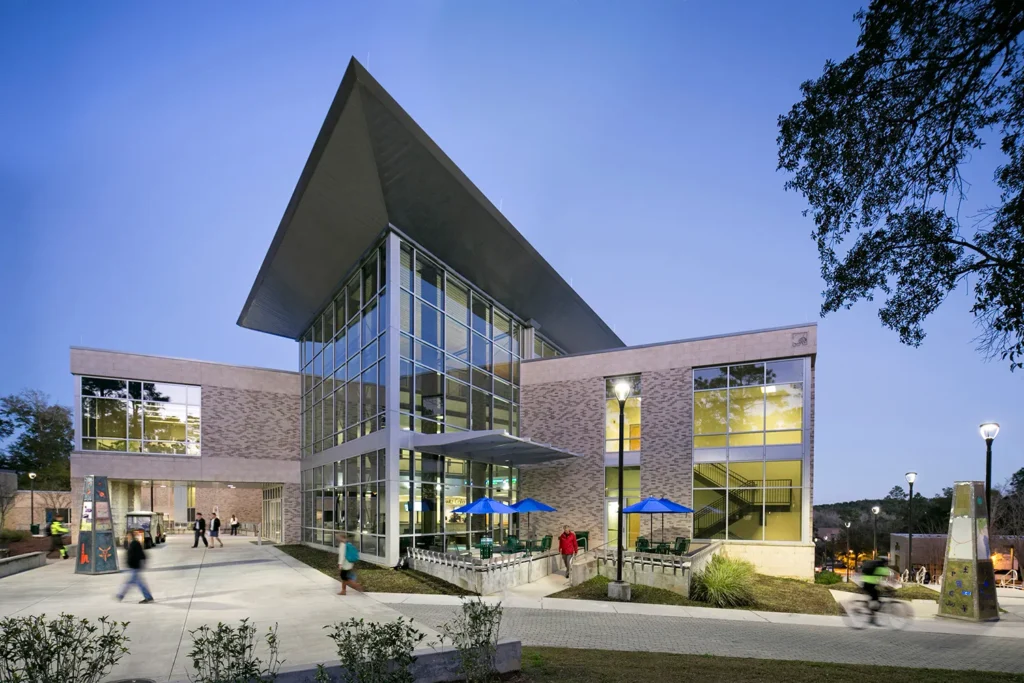
UWF’s social work education programs prepare students for meaningful careers serving different populations. The Bachelor of Social Work (BSW) and Master of Social Work (MSW) programs at UWF are fully accredited by the Council on Social Work Education’s Board of Accreditation. This ensures graduates receive education that meets strict national standards.
The BSW program gives you the foundations needed to start professional social work practice. Students must complete 51 semester hours in social work courses. The detailed undergraduate program combines theoretical knowledge with practical experience through field placements. BSW graduates can work in child and family services, mental health facilities, substance abuse programs, hospitals, and hospice care.
UWF’s MSW program develops advanced practitioners with exceptional clinical and critical thinking skills. Students learn to work with individuals, families, groups, communities, and organizations. They gain expertise in medical and behavioral health settings. The MSW program emphasizes working with military populations, which shows UWF’s dedication to meeting its regional community’s needs.
Core principles guide the education and practice of UWF social work students:
- Promoting human rights and social justice
- Advancing economic justice
- Respecting and embracing diversity
- Improving quality of life for individuals and communities
- Developing effective multi-level assessment and intervention skills
UWF’s Social Work Department has diverse faculty with extensive clinical, administrative, and research experience. Many faculty members are licensed clinical social workers (LCSWs) who bring decades of real-life practice to the classroom. Academic expertise and practical experience merge naturally to create a rich learning environment.
Dr. Campbell leads the department as Associate Professor and department chair, with over 30 years of clinical, administrative, and research experience. Dr. Joseph Herzog brings more than 20 years of experience as a human service provider and director of counseling centers. Jonathan Hoffmann serves as Field Director and supervises licensure-seeking registered interns in Florida.
Academic standards reflect the professional nature of UWF’s social work programs. BSW students must maintain at least a “C” in all social work courses. They need a University minimum GPA of 2.0 and a minimum GPA of 2.5 in their major before starting field instruction courses.
Field education is the foundation of both programs. Students apply classroom learning in supervised professional settings. The department has strong ties with placement agencies throughout the region. These strategic collaborations include child welfare, corrections, developmental disabilities, domestic violence intervention, family services, gerontology, healthcare, mental health, military settings, and substance abuse treatment facilities.
MSW graduates can pursue clinical social work licensure in Florida. This professional credential leads to advanced practice opportunities and higher responsibility levels. The curriculum builds a strong theoretical foundation and includes practical fieldwork to prepare graduates for various settings.
UWF social work students benefit from program flexibility. They can complete the MSW program face-to-face or fully online. This makes UWF an excellent choice for working professionals and students with various commitments.
UWF’s social work programs stand out through their steadfast dedication to ethical practice and social justice. Students understand how ethical principles and values create the framework for professional practice that embraces diversity and advances human rights. Graduates become practitioners who show critical thinking skills, professional values, ethical standards, and knowledge that lines up with CSWE guidelines and the National Association of Social Workers Code of Ethics.
Both programs’ accreditation status benefits students significantly. UWF social work has shown it has enough resources to meet its mission and goals. The Board of Accreditation has verified compliance with all Educational Policy and Accreditation Standards sections. This accreditation assures program quality and graduate competence, giving employers confidence in UWF social work alumni’s preparation.
Where is University of West Florida located
The University of West Florida spreads across several campuses and locations in Northwest Florida. Students pursuing social work degrees can learn in different environments and communities.
The main campus sits at 11000 University Parkway, Pensacola, Florida 32514. Natural woodland and rolling hills along the Escambia River make up its beautiful 1,600-acre campus. Social work students find this setting perfect. They can connect with nature while managing their demanding studies.
You’ll find the Pensacola campus just minutes from historic downtown and some of the world’s most beautiful beaches. Social work students can work with different communities and get hands-on experience. The campus features modern facilities, cozy residence halls, and beautiful grounds with plenty of activities. These features help social work students balance their studies with self-care.
Getting to campus by car is easy. From Interstate 10, take Exit 13 to Davis Highway, head north to University Parkway, and follow it to the campus entrance. If you’re coming from downtown Pensacola, take I-110 to I-10 east, then exit onto Davis Highway to reach the main campus.
UWF reaches more students through other locations. The Fort Walton Beach campus at 1170 Martin Luther King, Jr. Blvd, Fort Walton Beach, FL 32547 serves the Emerald Coast. This location works well for students who have completed 60 or more semester hours. Upper-level social work courses and field placements are available here, making it perfect for transfer students in BSW or MSW programs.
The trip to Emerald Coast campus from Pensacola takes you on Highway 98 through Gulf Breeze until you reach the Mary Esther cut-off. A few turns onto Hill Avenue will bring you to the UWF Emerald Coast campus.
UWF has a strong presence in historic downtown Pensacola. The UWF Historic Trust manages 32 properties across 9 acres in the historic downtown area and the Arcadia Mill archeological site in Santa Rosa County. The trust’s main office is at 120 Church Street, Pensacola, FL 32502.
These historic sites work as real-world labs for students studying history, archeology, and tourism. Social work students also use these facilities through team projects that help address unique social needs in historic areas.
UWF’s presence across Northwest Florida shows its dedication to education in the region. The university started in September 1967 as an upper-level school for juniors, seniors, and graduate students. Now, with almost 14,000 students, UWF’s main campus is the second-largest main campus in the Florida state university system.
Social work students should know UWF’s layout. Multiple locations make course scheduling and field placements flexible. The Department of Social Work at the main Pensacola campus offers most BSW and MSW courses. The Emerald Coast location serves students in the eastern area with selected social work courses.
First-time visitors should stop at the Welcome Center to get a visitor’s pass. Online campus maps show the Pensacola campus, UWF Emerald Coast, UWF Historic Trust, and downtown Pensacola facilities.
Northwest Florida gives social work students unique chances to work with military communities, coastal residents, rural populations, and urban communities. This mix of experiences prepares them for different work settings.
The Pensacola campus’s woodland setting and nearby beaches help students relax. Social work students need these spaces to reflect and unwind during their intensive program.
UWF’s smart placement of campuses across Northwest Florida creates an enriching environment. Social work students at all levels can access the education they need.
University of West Florida has a strong selection of social work programs that prepare students in social work careers of all types. Students can choose from undergraduate and graduate programs that provide complete education that lines up with professional standards.
The Bachelor of Social Work (BSW) program is the base of UWF’s social work education. The Council on Social Work Education has accredited this program that prepares you to start your professional social work practice. Students need to complete 51 semester hours in social work courses with field experience. This program helps you develop skills to assess, participate, intervene, and evaluate multiple systems and practice fields.
Students in the BSW program learn everything they need to work with children and families, mental health clients, substance abusers, and healthcare settings like hospitals and hospice services. The curriculum helps you understand ethical principles and values that are the foundations of professional practice that embraces diversity and advances human rights.
Students interested in specialized areas can choose from several valuable minors with their BSW degree:
- Aging Studies: Provides broad orientation to gerontology and service to elderly populations
- Child Welfare: Introduces information about social problems affecting children and families, plus available services
- Social Welfare: Has beginning courses on social work philosophy, ethics, and practice areas
- Substance Abuse: Fulfills some requirements for certification from the Certification Board for Addiction Professionals of Florida
The Master of Social Work (MSW) program prepares practitioners for advanced clinical work. CSWE has accredited this program that prepares graduates to work with individuals, families, groups, communities, and organizations in medical and behavioral health settings, especially when you have military populations. The program helps students pursue clinical social work licensure in Florida.
UWF offers two paths to earn the MSW degree. The Traditional MSW program needs 60 semester hours of graduate coursework if you have undergraduate degrees in fields other than social work. Students start with a 30-semester-hour foundation year curriculum that has a professional core (21 sh), two electives (6 sh), and a generalist practice foundation field experience (3 sh). Students complete 300 hours of field experience in one agency over a single semester during the foundation year.
Traditional MSW students move to the concentration curriculum after completing foundation courses. This part needs 30 additional semester hours with a professional core (18 sh), two electives (6 sh), and two field placements (6 sh). Students gain 600 hours of advanced clinical field experience in one agency across two semesters during the concentration year.
The Advanced Standing MSW program needs just 30 semester hours. Students with a baccalaureate degree in social work from a CSWE-accredited program can choose this option. This accelerated program has the concentration curriculum with a professional core (18 sh), two electives (6 sh), and two field placements (6 sh). Advanced Standing students complete 600 hours of clinical field experience over two semesters.
UWF’s MSW program stands out because of its flexibility. Students can complete the program face-to-face or fully online. This makes it available to working professionals and students with various life commitments. The program’s cost is substantially lower than many other graduate social work programs.
Both BSW and MSW programs help students develop culturally diverse practice-informed research and research-informed practice. This approach is vital to participate, assess, intervene, and evaluate individuals, families, groups, organizations, communities, and broader social contexts.
The Council on Social Work Education’s Board of Accreditation ensures these programs meet or exceed quality assessment criteria through peer review. This accreditation confirms UWF’s social work programs have enough resources to meet their mission and goals while following Educational Policy and Accreditation Standards. Students can be confident about program quality and their competence.
Students can choose from face-to-face, hybrid, and online formats in UWF’s social work education. Both BSW and MSW programs offer this flexibility so you can pick the learning environment that works best for you.
Field education plays a vital role in both programs. Students apply classroom learning under professional supervision. The MSW program has strong relationships with placement agencies throughout the region. These strategic collaborations include child welfare, corrections, developmental disabilities, domestic violence/crisis intervention, family services, gerontology, healthcare, housing services, mental health, military settings, rehabilitation, schools, and substance abuse treatment.
BSW and MSW students become practitioners with critical thinking skills, values, ethics, and knowledge that line up with CSWE guidelines and the National Association of Social Workers Code of Ethics. These programs give complete preparation for professional social work practice, with special focus on military populations, showing UWF’s steadfast dedication to serving regional community needs.
Field education at UWF
Social work training at the University of West Florida centers on field education, which the profession considers its “signature pedagogy.” Students get hands-on experience that connects classroom theory to ground settings. You’ll develop essential skills under professional guidance.
BSW students finish their program with a capstone experience at social service agencies. This placement requires completion of 400 hours in one semester (about 25 hours weekly during fall and spring, or 35 hours weekly in summer). You’ll take two courses together with this intensive placement: SOW4510 Field Instruction (9 semester hours) and SOW4522 Senior Seminar (3 semester hours). The seminar gives you the chance to apply theory and learn from your field experiences.
MSW students complete more extensive field work based on their program track. Traditional full or part-time MSW students start with a foundation level internship (SOW5532) of 300 hours at one agency in a single semester. Later, all MSW students—including Advanced Standing track participants—must complete a clinical level internship (SOW6535 and SOW6536). This involves 600 hours spread across two semesters (300 hours each) under qualified MSW field instructor supervision.
Each program has different field placement requirements. BSW students need at least 30 semester hours of required social work courses with grades of ‘C’ or better. They must maintain an overall 2.0 GPA and a 2.5 GPA in their major. Faculty members also review each student’s professional values, ethics, career orientation, and skill level before approving field placements.
Both programs share similar application steps. Students apply through the Field Education Office one semester before their intended start date. The department’s field placement software (now Experiential Learning Cloud, previously Tevera) processes your application for eligibility review[132]. Approved students interview with the Field Coordinator on scheduled dates and match with agencies for interviews. Once an agency agrees to accept you, you’ll submit a Field Confirmation Form through the system.
Supervision is vital to your field education success. Weekly face-to-face supervision with qualified field instructors lasts one hour for both BSW and MSW students. These instructors usually have a BSW or MSW degree from a CSWE-accredited program plus two years of post-degree practice experience. Field instructors can take up to 6 credits at UWF or another Florida university as a thank-you for their service.
Students connect classroom learning with field work through Integrative Field Seminar classes. MSW students attend weekly one-hour seminars that blend social work research, theory, and policy with field activities. BSW students take SOW4522 Senior Seminar alongside their placement. These seminars let you create learning contracts with field instructors, share agency summaries, and present client cases to learn from peers.
UWF works with many community agencies to offer diverse placements. These sites cover areas like:
- Child welfare and family services
- Corrections and rehabilitation
- Developmental disabilities support
- Domestic violence and crisis intervention
- Gerontology and elderly care
- Healthcare and mental health
- Military support services
- Public assistance programs
- School social work
- Substance abuse treatment
The Field Education Office matches students based on learning value rather than personal priorities. This helps you experience different practice settings and populations, expanding your professional skills.
Learning contracts track your progress with scores at midterm and semester end. You’ll also have at least one agency site visit midway through to check progress and discuss any issues.
The UWF Department of Social Work uses field placement software to manage internships effectively. All social work candidates must subscribe to this system. This electronic portfolio stores student data for program improvements and accreditation. You can choose between a one-time Exxat subscription or an access kit from the University Bookstore.
UWF’s competency-based field education follows the Council on Social Work Education’s 2015 Education Policy and Accreditation Standards. Students must show mastery of nine core social work competencies through practical application. Field education helps you learn and proves you’re ready for professional practice.
Students must spend at least 51% of field hours in direct client contact. This hands-on work with individuals, families, groups, and communities builds your professional foundation and prepares you for real social work practice after graduation.
What sets University of West Florida apart?
The University of West Florida’s social work programs stand out because of their remarkable flexibility. UWF’s Master of Social Work program lets students complete their degree face-to-face or fully online. Students can tailor the program to their educational needs, which works well with different learning styles and life situations.
UWF’s social work programs cost less than similar programs across the country. This budget-friendly approach makes quality social work education available to students of all backgrounds, bringing more diversity to the profession and helping underserved communities.
The social work department’s faculty makes UWF special. Students learn from caring professors who excel in both clinical practice and theoretical research. Licensed clinical social workers make up most of the faculty. They bring ground insights straight to the classroom. This blend of practice and scholarship keeps lessons rooted in today’s field realities while incorporating innovative technology.
Faculty members specialize in various areas including:
- Clinical mental health practice
- Military social work
- Child welfare
- Gerontology
- Substance abuse treatment
- Community organization
- Healthcare social work
UWF has developed strong relationships with placement agencies throughout the region. These strategic collaborations cover child welfare, corrections, developmental disabilities, domestic violence/crisis intervention, family services, gerontology, healthcare, housing services, mental health, military settings, public welfare, rehabilitation, schools, and substance abuse. Students benefit from exceptional field placements thanks to these well-established community connections.
The MSW program’s specialized focus on military populations makes it unique. This emphasis shows UWF’s steadfast dedication to military personnel, veterans, and their families – especially important given Northwest Florida’s large military presence. Graduates learn to work effectively with individuals, families, groups, communities, and organizations in medical and behavioral health settings, with particular attention to military populations.
Unlike programs that favor research over practice, UWF’s social work curriculum provides a strong theoretical foundation with field work that prepares graduates for social work of all types. Students develop critical thinking abilities and practical skills they need for effective professional practice.
UWF’s MSW program meets Florida’s educational requirements for clinical social worker licensure. Graduates can pursue advanced clinical practice right after completion. This licensure preparation gives them an edge in career advancement.
Social work values run deep at UWF. The department champions human rights, social and economic justice, and respect for diversity to improve quality of life. These ethical principles pervade the curriculum, creating graduates who combine professional values with technical expertise.
The Council on Social Work Education’s accreditation of both BSW and MSW programs confirms their quality. This credential shows UWF’s programs exceed rigorous quality criteria through peer review. Accreditation also confirms these programs have enough resources to achieve their mission and goals, meeting all Educational Policy and Accreditation Standards sections.
UWF takes pride in preparing students thoroughly. The university states: “Here at the University of West Florida we take great pride in our students and the preparation they receive to do great work in the community”. This student-focused environment helps future social workers build knowledge, skills, professional identity, and confidence.
The unique mix of flexibility, affordability, expert faculty, strong community partnerships, specialized focus areas, licensure preparation, and steadfast dedication to social work values makes UWF an outstanding choice for social work education at both undergraduate and graduate levels.
Next steps
Want to become a social work student at UWF? The application process is simple. Check the current application deadlines through the “Application Deadlines” quicklink on the university website.
UWF’s social work programs welcome new students in several ways. You can start your application by clicking “Apply Now,” schedule a campus visit, or get more information by submitting your name and email through the online form.
After acceptance into your chosen social work program at UWF, complete these tasks before classes begin:
- Create and verify your student account
- Accept any financial aid offers, including loans, scholarships, or grants
- Work with your assigned online academic advisor for program guidance
- Enroll in your online or on-campus courses
- Pay tuition and associated fees
- Purchase required textbooks and course materials
Students interested in the online MSW program should fill out the inquiry form. This connects you with an enrollment counselor who can answer questions about the program’s structure, timeline, and requirements. Their tailored guidance helps prepare you for the challenging yet rewarding experience ahead.
Program length varies based on your course load and availability. An academic advisor will help you create a timeline that matches your professional goals. Advanced Standing MSW students finish faster than Traditional MSW students because of their prior social work education.
A social work degree from UWF leads to meaningful career opportunities in many settings. Graduates make real differences in their communities through roles in child protective services, adoption agencies, schools, mental health centers, substance abuse treatment programs, courts, and other settings.
Your path to becoming a skilled social worker starts with one application. UWF offers a supportive environment, experienced faculty, and a detailed curriculum that gives you the knowledge, skills, and ethical foundation needed for this vital profession.