
Barry University Social Work Programs
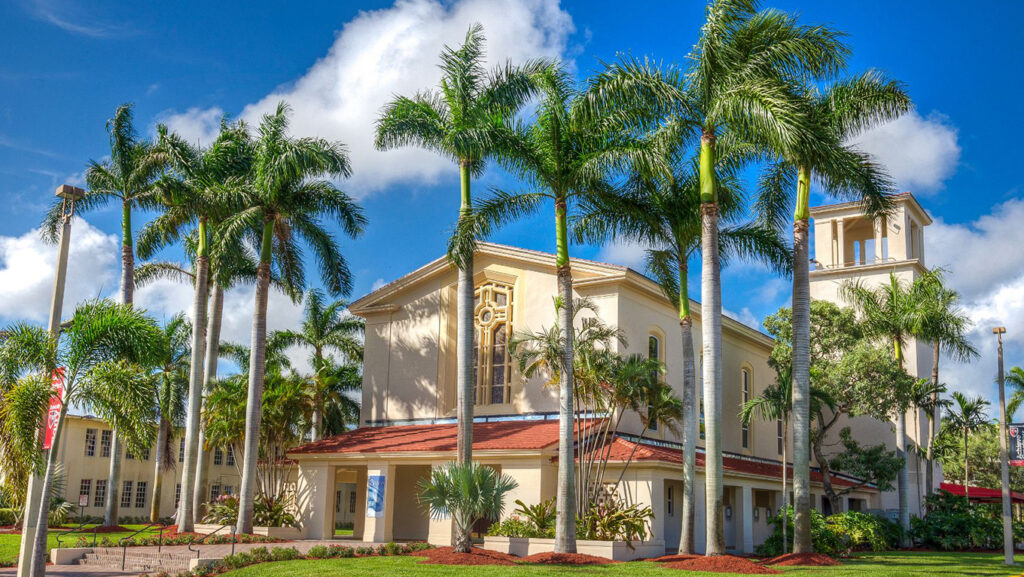
Barry University shines as a unique social work education hub that prepares students for effective careers in the field. The Social Work Department equips graduates with trauma-informed, resiliency-focused education to become skilled practitioners, leaders, and promoters of change.
The university’s social work education builds on professional values and the institution’s mission. Students learn to become ethical and competent social workers through a trauma-informed, person-in-environment resiliency framework. This approach helps them understand human behavior deeply and tackle complex social issues.
Students can choose between full-time and part-time options in the Master of Social Work Program. The program features two paths: a complete 63-credit degree plan for newcomers and a simplified 32-credit plan for Bachelor of Social Work degree holders who want advanced clinical practice. Students can finish the accelerated program in just 16 months, which is the quickest way to start their career.
The program’s trauma-informed, resiliency-based curriculum sets Barry University apart. Students learn to handle trauma at individual, family, group, organizational, and systemic levels. Graduates develop specialized skills that the field values by creating safety and hope through respect for clients’ trauma histories.
South Florida’s cultural, economic, and social diversity shapes the department’s direction, programs, hiring, and community collaborations. Students experience rich and life-changing learning in this vibrant environment that’s perfect for research, advocacy, and community work.
Barry University’s social work programs hold full accreditation from the Council on Social Work Education. This verification ensures high-quality education that meets professional standards and boosts job prospects for graduates.
The Bachelor of Social Work (BSW) program creates direct service generalist practitioners. BSW graduates, like medical general practitioners, master various knowledge, methods, and skills to help individuals, families, small groups, and larger systems. Students take 13 social work courses (39 credits) and two upper division psychology courses to build strong professional foundations.
The Master of Social Work (MSW) program stands out with these benefits:
- Award-winning faculty
- Specialized trauma-informed curriculum
- Ground field experiences
- Flexible learning options including full-time, part-time, weekend, evening, and online classes
- Advanced Standing Program letting qualified students earn their MSW in less than a year
The university offers doctoral education through Ph.D. and DSW programs. Ph.D. students learn to conduct independent research that helps clinical practice, service delivery, advocacy, and systemic change. The DSW program features a trauma-informed curriculum that gives graduates an edge in Advanced Clinical Practice and Administration through affordable, online learning.
Academic program goals reflect Barry University’s and the Social Work Department’s missions. These goals respond to the unique socio-political-cultural context of vulnerable and oppressed populations. Social justice remains central to all levels of social work education here.
Service learning plays a vital role in Barry’s education. Students apply classroom knowledge in real-life settings while developing professional skills through service-learning opportunities and yearlong clinical practice experiences.
Barry University creates an environment that respects and supports persons with disabilities. The university follows Section 504 of the Rehabilitation Act of 1973 and the Americans with Disabilities Act. This inclusive approach extends throughout all social work programs.
Barry University’s social work programs blend academic excellence with hands-on experience. Students gain specialized skills through trauma-informed, resiliency-focused training that today’s social work practice values highly. The university equips graduates at bachelor’s, master’s, and doctoral levels with theoretical knowledge and practical skills to make lasting impacts in their field.
Where is Barry University located
Barry University’s educational offerings spread across several well-placed campuses throughout Florida. The university runs its main operations from Miami Shores. Students who want to pursue social work degrees will find this location perfect. It blends academic excellence with hands-on learning opportunities in diverse communities.
The main campus sits at 11300 NE 2nd Avenue, Miami Shores, FL 33161. This private Catholic university has made its home in a quiet residential area that gives students a safe and peaceful setting. All the same, students stay connected to real-life experiences. The campus puts them right next to Miami’s rich cultural scene and fun activities, creating the perfect mix for social work students.
The main campus is notable with its 54 buildings. These buildings house academic departments, offices, student facilities, and resources built specifically for social work education. This layout helps future social workers focus on their studies and work with their classmates and teachers in comfortable, well-equipped spaces.
Students thinking about Barry University’s social work programs will appreciate its location between Fort Lauderdale and Miami. The campus is easy to reach from different directions and transport hubs. A 15 to 20-minute drive from Miami International Airport brings you to campus, with Super Shuttle offering rides at about $10 per person. Students landing at Fort Lauderdale-Hollywood International Airport can reach campus in roughly 20 minutes. Gray-line Airport Services runs transport services for about $15 per person.
The university reaches beyond its main campus with several locations across Florida. A branch campus in Tallahassee serves students in the state capital region. The Dwayne O. Andreas School of Law has its own campus in Orlando, perfect for students interested in combining legal studies with social work.
Barry University also runs satellite locations that focus on adult and nontraditional students seeking continuing education and graduate studies. These locations include:
- Orlando: This site offers various continuing education programs and specialized social work courses alongside the law school.
- Palm Beach: Students here can access social work programs along with business, education, and public administration courses.
- Tampa: The Tampa site brings programs in business, education, and social work to students in western Florida.
These locations make Barry University’s top social work programs available to students across Florida. Keep in mind that these additional campuses might have different facilities and fewer program options than the main Miami Shores campus.
Multiple Florida locations show Barry University’s steadfast dedication to quality social work education for different student groups. Students in the master’s in social work program can choose how and where they want to study. Working professionals looking to advance their careers through graduate social work education find this flexibility particularly helpful.
The Miami Shores campus creates an ideal setting for social work education with its detailed facilities and position within South Florida’s diverse social landscape. Students get valuable exposure to different populations and social issues, which adds depth to their classroom learning. South Florida’s cultural, economic, and social diversity shapes the department’s strategy and program design, as noted in the “About” section. This makes it a perfect place to train culturally aware social work practitioners.
Students in Barry University’s social work master’s program benefit from strong ties with community organizations, healthcare facilities, and social service agencies near each campus. These professional partnerships boost the practical aspects of their education.
Local communities around each campus work closely with the university. This creates chances for service-learning projects and community research that help both students and residents. Students can practice what they learn while helping real community needs.
Barry University’s campus network across Florida builds a strong foundation for social work education at every level. Each location, from the main campus in Miami Shores to specialized regional sites, helps prepare skilled, caring social work professionals ready to serve communities throughout Florida and beyond.
Students looking at Barry University’s social work programs will find locations that offer both quality education and real community engagement. These elements are crucial to develop effective, culturally aware social workers ready to tackle today’s social challenges.
Barry University’s Department of Social Work offers a complete suite of degree programs that prepare students at every career stage. These programs showcase the university’s steadfast dedication to trauma-informed, resiliency-based social work education.
The Bachelor of Social Work (BSW) program equips students with essential skills they need for entry-level practice. Students must complete 45 credits across five different curricular divisions. This creates a strong liberal arts foundation that adds to specialized social work knowledge. The BSW program gives newcomers to the field broad skills they can use in social service settings of all types.
The Master of Social Work (MSW) program is the flagship of Barry’s social work education. Students can choose from multiple pathways based on their needs and educational background. A 63-credit degree plan serves students without a BSW background. BSW graduates can opt for an efficient 32-credit plan that focuses on advanced clinical practice training.
Students can pursue their MSW degree through several formats:
- Full-time study at the Miami Shores main campus
- Part-time study at the Miami Shores main campus
- Online part-time study
- Online full-time study (available for the 32-credit Advanced Standing option)
This flexibility helps working professionals, full-time students, and those who need distance learning options. Students typically complete the traditional 63-credit full-time program in four semesters. The program combines coursework with clinical internship experiences. Students who can handle intensive study can choose the accelerated 16-month option.
BSW graduates have a great chance to earn their MSW degree faster through the Advanced Standing program. Full-time students can complete this 32-credit option in just two semesters. The program builds on their undergraduate social work education instead of repeating basic content.
Barry University welcomes MSW students during fall, spring, and summer semesters at the Miami Shores campus. This rolling admission gives students more flexibility to plan their educational trip.
The Doctor of Social Work (DSW) degree serves MSW practitioners who want a practice-focused doctoral degree rather than traditional research-focused Ph.D. programs. The program specializes in Trauma-Informed Leadership and Practice, which lines up with the department’s focus on trauma-informed approaches.
A unique curriculum approach unifies all Barry University social work programs. The department uses a trauma-informed, resiliency-based framework throughout its programs. Graduates learn to address trauma at various systemic levels, from individual client interactions to organizational and community interventions.
The MSW curriculum focuses on clinical social work practice. Students develop specialized skills for advanced clinical roles with individuals, families, groups, organizations, and communities. These skills are highly valued in today’s practice settings.
Online MSW students enjoy both flexibility and engagement. Live virtual sessions complement a flexible learning format. Students complete coursework and field experiences on their schedule. They receive strong support through faculty advising and access to university resources.
Field education plays a vital role in all Barry University social work programs. Students connect classroom learning with ground application through clinical practice. The Office of Professional and Clinical Practice partners with diverse agencies like Catholic Charities, Broward County Public Schools, Families First of Palm Beach County, Henderson Behavioral Health, and Jackson Health Systems. These partnerships give students valuable practical experience alongside their studies.
Barry University’s social work programs follow the Council on Social Work Education’s Educational Policy and Accreditation Standards. The university reduces barriers for underrepresented, historically marginalized, and currently oppressed groups through its admissions policies. This matches the profession’s core values and the university’s service mission.
Barry University’s social work programs offer extensive educational pathways. Students can progress from the foundational BSW to the practice-focused DSW within a consistent philosophical framework. Each program builds on previous levels, creating clear advancement paths for dedicated social work professionals.
Field education at Barry University
Field education is the substance of professional social work training at Barry University. Students get hands-on experience that connects classroom theory with real-life practice. Barry University sees field education as the signature pedagogy in social work education. The Council on Social Work Education highlights it as the central form of instruction that teaches students to become practitioners.
BSW and MSW programs follow Barry’s trauma-informed, resiliency-focused conceptual framework. This approach recognizes trauma’s role in human vulnerability. It emphasizes finding and activating individual strengths and recovery capacity. Students apply these concepts in supervised professional settings, which creates a natural bridge between academic knowledge and practical skills.
Bachelor of Social Work students follow a well-laid-out sequence of practical experiences. The BSW program requires students to complete Clinical Education Practicum I and II – two mandatory courses taken back-to-back during senior year. These courses add up to 420 hours of supervised educational experience in agency settings. Students complete 140 hours in Clinical Education Practicum I during fall semester and 280 hours in Clinical Education Practicum II during spring semester.
BSW students must meet several criteria before starting field education:
- A 2.50 cumulative GPA in all Barry coursework
- A 3.0 GPA in all social work courses
- 45 service learning hours
- Required field application forms
- Successful completion of prerequisite courses
These requirements give students a strong academic foundation before they work with clients and communities.
Master of Social Work students have more extensive field requirements based on their program track. Students in the full-time 60-credit MSW program must complete 1,000 total field hours across four sequential courses. The sequence starts with Field Education I (140 hours), moves to Field Education II (280 hours), Field Education III (280 hours), and concludes with Field Education IV (300 hours). Students in the 32-credit Advanced Standing program complete 500 hours of clinical internship.
MSW’s field education curriculum builds competence through progressive learning experiences. Students from all program tracks must join clinical internship seminars alongside their fieldwork. These seminars help with reflection, integration, and professional development through case presentations and peer discussions.
Barry University partners with many agencies to give students diverse field placement experiences. Students can work in schools, substance abuse facilities, medical and mental health organizations, and various public and non-profit settings. Catholic Charities, Broward County Public Schools, Families First of Palm Beach County, Henderson Behavioral Health, and Jackson Health Systems are some key partners. This variety lets students match field experiences with their career goals.
Students must meet several practical requirements before starting field placements. Most field internship agencies need a background check, which students pay for unless the agency offers it free. Students with criminal records must tell the Associate Director of Field Education, who can look into possible placement options. Agencies might reject students due to felony or misdemeanor convictions, failed drug tests, or missing health clearance.
Professional liability insurance is essential for field education. Barry’s School of Social Work buys liability insurance through the National Association of Social Workers for all clinical education practicum students. While the school covers most costs, students pay a $25 co-pay each semester when enrolling in a new clinical education practicum course. The School of Social Work also pays an accreditation fee through the Council for Social Work Education, with students paying an $85 co-pay yearly for Social Work Program coursework.
Field education includes classroom learning too. Students attend three full class sessions each semester while doing their internships. These sessions help connect theory and practice through extended learning opportunities and case discussions. Missing these mandatory sessions could lead to course failure.
Barry University’s field education office carefully places students in settings that match their educational goals. The program works with agencies that create learning environments where students can show core competencies. BSW student supervisors need at least a bachelor’s degree in social work from a CSWE-accredited institution and two years of post-degree experience. MSW student supervisors must have a master’s degree in social work from a CSWE-accredited institution with two years of post-degree experience.
Barry University’s field education experience shows its dedication to complete social work training. Students graduate ready to serve people of all backgrounds in different practice settings, thanks to strong academic preparation combined with extensive hands-on experience.
What sets Barry University apart?
Barry University’s social work programs go way beyond the reach and influence of regular curriculum and field experiences. The university stands out from other institutions through its innovative educational approach and exceptional student outcomes.
The trauma-informed, resiliency-based curriculum sits at the core of Barry’s uniqueness. This detailed educational framework helps graduates verify and address trauma at individual, family, group, organizational, and systemic levels. Students learn to create safety and hope for clients by respecting their trauma histories. This approach helps students become skilled at working with vulnerable populations across all program levels.
Barry University’s programs have earned the Department of Homeland Security’s STEM designation. The Bureau of Labor Statistics projects STEM occupations to grow 11 percent from 2022 to 2032, faster than the average growth rate. Students get great opportunities as employers look for leaders who can balance technical expertise with communication and leadership skills.
Multiple prestigious accreditations show the university’s excellence. The Southern Association of Colleges and Schools Commission on Colleges (SACSCOC) has accredited Barry University to award baccalaureate, master’s, specialist, and doctoral degrees. The Ellen Whiteside McDonnell School of Social Work’s B.S.W. and M.S.W. programs have full accreditation from the Council on Social Work Education (CSWE). These accreditations ensure graduates receive education that meets high professional standards.
The program’s impressive numbers tell its success story:
- 14:1 student-faculty ratio enables individual attention
- Over 90% of students get financial aid, making education available
- More than 200 community partnerships in South Florida provide varied field opportunities
- 14% projected growth in Child, Family & School Social Work positions
- 20% projected growth in Healthcare & Medical Social Work positions
- 19% projected growth in Mental Health & Substance Abuse positions
South Florida’s unique environment shapes Barry University’s social work programs. The region’s cultural, economic, and social diversity influences the department’s strategic agenda, program design, hiring practices, and community partnerships. Students experience rich and transformative learning while getting ideal conditions for research, advocacy, and community involvement.
The university shows exceptional financial support for its students consistently. The School of Social Work earned perfect reaccreditation (2003-2017) and gave over $1.70 million in scholarships to students in each of the last two years. This financial support removes barriers to education and shows the institution’s commitment to student success.
Students can focus on specialized areas like children and families, veterans services, human trafficking, substance use, and governmental or nonprofit organizations. The emphasis on trauma-informed care systems improves graduates’ work with individuals and communities, helping them heal from generational, historic, and personal traumas.
Barry graduates rank among the top 10 percent of salary earners among Florida’s 28 private, not-for-profit educational institutions, according to the Florida Department of Education. This statistic shows how much employers value Barry University degrees.
VIQTORY Media named Barry University as a Military Friendly® School, placing it among the nation’s top institutions supporting military members (2022-2023). This recognition shows the university’s support for veterans and active-duty personnel studying social work.
The Carnegie Foundation gave Barry its Community Engagement Classification in 2015. This evidence-based recognition arranges perfectly with social work values and creates meaningful community involvement opportunities for students.
The School of Social Work started in 1966 as South Florida’s first graduate social work program. The 56-year-old program began during community upheaval in the early and mid-1960s when social workers were highly sought after. This foundation of social responsiveness still guides the program today.
The MSW curriculum focuses on clinical social work practice. Students prepare for advanced clinical practice with individuals, families, groups, organizations, and communities. They can also take advanced courses in macro practice, getting a well-rounded education that prepares them for various career paths.
Barry University creates exceptional social work professionals by combining academic excellence, community involvement, and a trauma-informed approach. These professionals can tackle today’s social challenges with competence and compassion.
Next steps
Want to get your social work degree at Barry University? The first step is to know how the application process works.
Here are the key deadlines to apply for the Master’s in Social Work program:
- Fall Semester: July 15th
- Spring Semester: December 1st
- Summer Semester (advanced standing students only)
Barry University reviews applications on a rolling basis, so submitting early gives you an advantage. The review process takes four to six weeks after they receive all your materials. You’ll get a written notice about their decision.
The Doctor of Social Work program needs you to have an MSW from a CSWE accredited program, two years of post-master’s social work experience, and a minimum 3.50 GPA. The Traditional MSW program usually asks for a 3.0 or higher undergraduate GPA (with at least 3.0 in all Social Work courses) and two recommendation letters.
After acceptance, you’ll face some extra requirements before starting classes. Many students need criminal background checks, which you might have to pay for unless the agency covers it. Criminal convictions could make it hard to place you in clinical training settings and might delay your graduation. Some agencies also need drug tests and medical screenings before clinical training.
Barry University gives all qualified applicants fair consideration, no matter their background. The Program Director might make exceptions to standard admission policies in special cases.
The costs go beyond tuition. Social work students pay $25 each semester for liability insurance through the National Association of Social Workers during clinical education practicum courses. There’s also an $85 yearly fee for accreditation through the Council for Social Work Education.