
Florida Agricultural and Mechanical University Social Work Programs
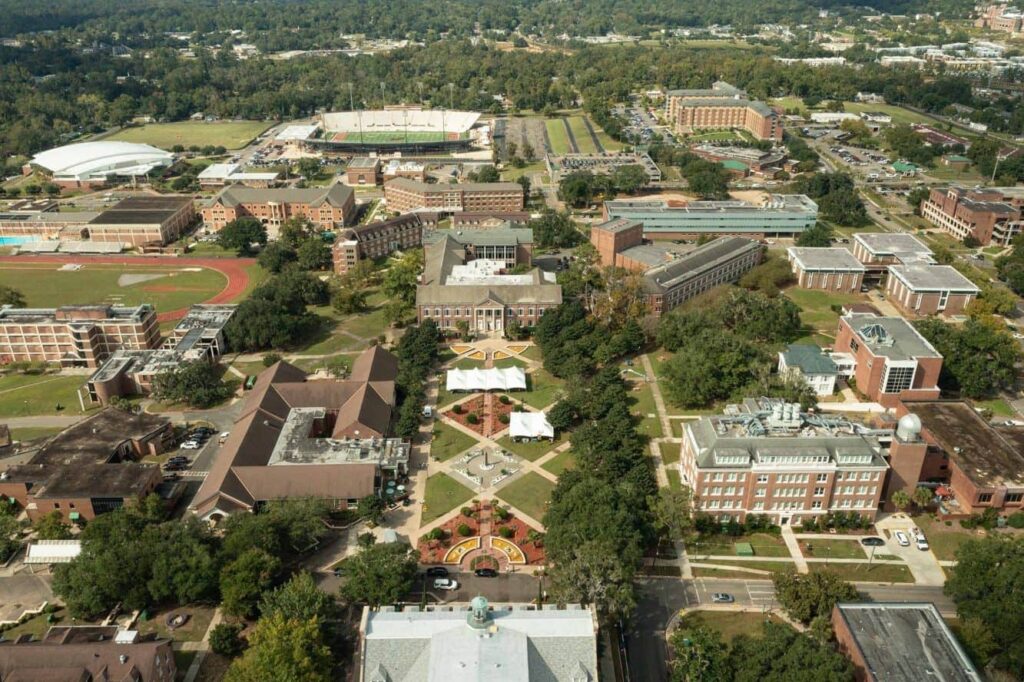
Florida Agricultural and Mechanical University (FAMU) has a 49-year-old legacy in social work education. The university prepares professionals who make meaningful contributions to communities in Florida and across the nation. Since 1974, FAMU’s Department of Social Work has been pioneering the training of skilled practitioners who promote social and economic justice.
The Department of Social Work, under the College of Social Sciences, Arts and Humanities, offers both undergraduate and graduate-level programs that uphold the highest professional education standards. The Bachelor of Social Work (BSW) and Master of Social Work (MSW) programs have received full accreditation from the Council on Social Work Education. This substantially improves the value of FAMU degrees.
This accreditation is a big deal as it means that many states, employers, and graduate schools either just need or strongly prefer graduates from accredited social work programs. FAMU students benefit from wider career opportunities and greater professional recognition after graduation.
FAMU’s social work profession focuses on promoting human and community well-being. The curriculum accepts new ideas through a person-in-environment framework with a global point of view and strong respect for human rights. On top of that, it bases all academic instruction and fieldwork on scientific inquiry. This helps graduates develop evidence-based approaches to social challenges.
The BSW program prepares students to become generalist social work practitioners. Students learn through a detailed curriculum that covers the profession’s history, knowledge, values, ethics, and skills. The upper-division professional program begins in junior year after completing 60 credit hours of general education requirements. The professional curriculum has 60 credit hours, including 12 hours of valuable field placement experiences.
The MSW program builds on this foundation and offers advanced training that focuses on administration and community development. Graduate students learn to solve problems effectively at administrative, organizational, and community levels. This specialized concentration gives graduates expertise to lead in developing, planning, implementing, and evaluating culturally competent services, policies, and research.
Both programs aim to promote social and economic justice while easing poverty and oppression in all forms. The core team works with students, university staff, and community partners to deliver high-quality education that improves human well-being in a variety of contexts. Students learn to solve problems collaboratively with individuals, groups, and communities while supporting disadvantaged populations.
Career Pathways for FAMU Social Work Graduates
A Social Work degree from FAMU opens doors to rewarding careers in:
- Child welfare
- Hospital social work (entry-level)
- VA supported housing
- School social work (entry-level)
- Family court social work (entry-level)
- Social welfare provider outreach
- Clinical social work (entry-level)
- Government agency social work (entry-level)
Social work professionals have promising career prospects. The U.S. Bureau of Labor Statistics projects 6% growth from 2024 to 2034, faster than average for all occupations. About 74,000 job openings will appear annually due to retirements and transfers. This shows the sustainable need for qualified social workers.
FAMU’s social work programs have important policies. Neither program gives academic credit for previous paid work, volunteer experience, or life experience. The university believes in structured academic preparation and supervised field experience as foundations for professional practice.
Many MSW programs recognize FAMU’s strong undergraduate preparation by offering advanced standing opportunities to BSW graduates. This can reduce graduate degree completion time, creating an optimized path to advanced professional qualifications.
FAMU’s Department of Social Work creates professionals who blend compassion with problem-solving capabilities, strong communication skills, and effective advocacy techniques. This balanced approach helps prepare social workers who serve communities and lead efforts to revolutionize systems for lasting social change.
Where is FAMU located
Florida Agricultural and Mechanical University (FAMU) sits atop one of Tallahassee’s seven hills, offering a stunning view of the surrounding area. The campus creates an inspiring learning environment for social work students with its commanding position in this picturesque city.
The university’s main campus address is 1601 S. Martin Luther King Jr. Boulevard, Tallahassee, FL 32307. Students will find the Department of Social Work at 510 Orr Drive, Suite 4000, Tallahassee, Florida 32307. This dedicated space gives social work students access to facilities that match their educational needs.
Students might also come across another campus address: 1500 Wahnish Way, Tallahassee, FL 32307-3100. Wahnish Way runs through the campus as a main road that links various academic buildings and student facilities. First-time visitors should note that these addresses simply point to different entry points of the same campus.
FAMU’s location in Florida’s capital city proves strategic. The campus lies just south of the State Capitol building, close to Florida State University. Social work students benefit from this proximity to government institutions and another major university, creating opportunities to get involved in policy, research, and community work.
The university’s location in Tallahassee’s panhandle region lets students enjoy outdoor activities year-round. This setting helps students balance their studies with recreation in a climate that’s perfect for outdoor pursuits throughout the year.
Students planning to visit FAMU’s social work programs can reach the campus through several routes:
From Tallahassee International Airport:
- Exit right onto Capital Circle and head east to the Springhill Road traffic light
- Turn left onto Springhill Road and continue north until Orange Avenue
- Turn right onto Orange Avenue and continue to Wahnish Way
- Turn left onto Wahnish Way and proceed approximately half a mile to reach campus
From Interstate 10 (East): If arriving from Alabama or Pensacola:
- Take Exit 192 to U.S. 90
- Drive about 10 miles east on U.S. 90
- Turn right onto Macomb Street
- Continue as the street changes to Railroad Avenue and then to Wahnish Way
From Interstate 10 (West): If arriving from I-75 or I-95:
- Take Exit 209A to U.S. 90 westbound
- Continue on U.S. 90 (Tennessee Street) for approximately 8 miles
- Proceed through the Monroe Street intersection and travel another half mile
- Turn left onto Macomb Street
- Follow as the street transforms into Railroad Avenue and subsequently Wahnish Way
From Atlanta and Points North:
- Take U.S. 319 South through Thomasville, Georgia
- As you approach Tallahassee, stay on Thomasville Road
- After crossing under Interstate 10, continue for about 4 miles
- Turn left onto Monroe Street (U.S. 27)
- Continue to Tennessee Street and turn right
- Proceed west to Macomb Street and turn left
- Follow as the street becomes Railroad Avenue and later Wahnish Way
From U.S. 27 (Apalachee Parkway):
- Apalachee Parkway concludes at the Capitol Building
- Move to the outside left lane and turn left onto Monroe Street
- At the second traffic light, turn right onto Gaines Street
- Continue on Gaines and turn left onto Railroad Avenue
- Railroad Avenue transitions into Wahnish Way at the FAMU Way intersection
Visitors can find parking near Bragg Memorial Stadium, which serves as a key campus landmark. Many buildings use this facility as a reference point for navigation.
FAMU’s Tallahassee location gives social work students exceptional advantages. The city houses numerous government agencies, social service organizations, and policy-making bodies. Students gain access to field placements, internships, and future job opportunities.
The university’s setting in this historically rich region of Florida connects students with communities that have diverse needs and deep cultural traditions. This environment makes FAMU’s social work programs even more relevant, with their focus on social justice and helping underrepresented populations.
Students looking at FAMU’s social work programs should see its location as more than just an address. The Tallahassee setting offers real-life advantages for academic study and helps students develop professional skills to tackle social challenges.
FAMU’s Department of Social Work has two degree programs that get students ready for different levels of professional practice. These programs are nationally recognized and give students a complete education in social work theory, practice, and field experience.
Students can choose between undergraduate and graduate paths at FAMU. Each path matches specific career goals and practice levels. Both programs have accreditation from the Council on Social Work Education, which will give a solid foundation for professional practice.
Bachelor of Social Work (BSW) Program
FAMU’s BSW program gets students ready for entry-level generalist social work practice. The curriculum really covers the profession’s history, knowledge, values, ethics, and skills. Students need 120 semester hours to finish this undergraduate program.
The program has a well-laid-out format with two phases:
- Pre-Social Work Major Phase: Freshman and sophomore years with 60 credit hours of general education and prerequisite courses
- Upper-Division Phase: Junior and senior years with 60 credit hours of professional social work courses
Students must meet these requirements to move from pre-social work to full social work major status:
- Complete the general education curriculum (60 credit hours)
- Complete the BSW application process
- Keep at least a 2.0 GPA overall
The upper-division professional curriculum has:
- 12 required Social Work courses (36 credit hours)
- 3 Social Work electives (9 credit hours)
- Field Practicum and Integrative Seminar (15 credit hours)
The BSW curriculum covers key areas like social work practice (12 credit hours), research (6 hours), human behavior (6 credit hours), policy (6 credit hours), self and multicultural awareness (3 credit hours), ethics (3 credit hours), field education (15 credit hours), and specialized interest areas (9 credit hours).
Students start their specialized social work courses in junior year after finishing general education requirements. They must keep at least a 2.0 GPA overall. All courses need a grade of ‘C’ or better.
FAMU’s BSW Program doesn’t give academic credit for previous paid work, volunteer work, or life experience. This makes sure all graduates get the same professional preparation whatever their background.
Master of Social Work (MSW) Program
FAMU’s Master of Social Work program helps students become skilled at advanced macro social work practice. It focuses on community-based organizations and social service administration. The MSW curriculum equips graduates to promote social and economic justice as knowledgeable, ethical, and socially responsive macro practitioners.
FAMU’s graduate program stands out by specializing in Community, Administration, and Policy (CAP) settings. Graduates learn to solve problems at administrative, organizational, and community levels instead of focusing on clinical practice.
The professional curriculum needs 67 credit hours, including:
- 35 credit hours of foundation courses
- 32 credit hours of advanced coursework in administration and community development
- 12 hours of field placement experiences
The MSW curriculum builds on strong liberal arts and generalist practice foundations. Students learn critical thinking and evidence-based strategies to improve human and social well-being. They develop skills to work with people of all backgrounds, families, groups, organizations, and communities.
FAMU’s MSW graduates are ready for advanced practice, entrepreneurship, and leadership roles beyond case management. Career paths often include:
- Program Director or Administrator in social service agencies
- Community Development Specialist
- Policy Analyst or Advocate
- Nonprofit Executive or Program Manager
- Research and Evaluation Specialist
- Grant Writer and Resource Development Manager
Program Statistics
FAMU awarded 66 bachelor’s degrees in social work during 2021-2022. This showed a 10% drop from 73 degrees the previous year. That same year, 31 students got their master’s degree in social work, making FAMU the #230 most popular school for social work master’s degrees nationally.
Advanced Standing Opportunities
BSW graduates from FAMU might qualify for advanced standing in many schools offering Master of Social Work Degrees. This can cut down the time needed for a graduate degree, creating an optimized path to advanced qualifications.
Accreditation Significance
The Council on Social Work Education fully accredits both BSW and MSW programs. This matters because many states, employers, and graduate schools prefer or require graduates from accredited programs. FAMU students get more career opportunities and professional recognition after graduation.
Both programs’ curriculum follows the Educational Policy and Accreditation Standards (EPAS) from the Council on Social Work Education. This means FAMU’s social work education meets or exceeds national standards for professional preparation.
Field education at FAMU
Field education serves as the substance of professional preparation at Florida Agricultural and Mechanical University. It creates a vital bridge between classroom theory and ground social work practice. Students apply theoretical knowledge under supervision. This experience builds their professional competence and identity.
FAMU’s field education follows a well-laid-out approach. Learning experiences receive careful design, supervision, coordination, and evaluation based on CSWE criteria. Students show their skills in core social work competencies and behaviors in actual practice settings.
BSW students must complete a full-time work week during one semester to graduate. This deep immersion gives undergraduate students complete exposure to generalist practice settings. MSW students also need field placements to earn their degree. Their experiences focus on advanced practice skills that match the program’s macro concentration.
The professional MSW curriculum dedicates twelve credit hours to field placement. The program sequences these hours carefully:
Foundation Year Placement Options:
- SOW 5534 Field Practicum I (3 credits) with SOW 5545 Field Seminar I (1 credit)
- SOW 5535 Field Practicum II (3 credits) with SOW 5546 Field Seminar II (1 credit)
- Alternative option: SOW 5532 Block Field Foundation (8 credits)
Advanced Concentration Year Placement Options:
- SOW 5538 Field Practicum III (3 credits) with SOW 5547 Field Seminar III (1 credit)
- SOW 5539 Field Practicum IV (3 credits) with SOW 5548 Field Seminar IV (1 credit)
- Alternative option: SOW 5550 Concentration Year Field Block Placement
FAMU’s field education puts students’ goals and learning needs first. This approach creates a supportive, collaborative environment where professional growth thrives. Students learn within agency or organizational settings. Their learning experiences connect directly to client interactions and complex service delivery systems.
Field instruction helps students link classroom theory with hands-on activities. Students create a Learning Plan to guide their experiential education. BSW and first-year MSW students’ plans ensure balanced exposure to micro, mezzo, and macro practice experiences. Specialized MSW students focus on macro-level experiences. These include policy development, administrative functions, and community practice.
The MSW Field Practicum Director manages the field education component. This faculty position needs specific credentials. These include a master’s degree in social work from an accredited program and two years of full-time post-master’s professional experience. The director must know CSWE standards well to maintain accreditation requirements.
The Field Director’s duties include:
- Creating field policies, procedures, and objectives
- Investigating and establishing field placement sites
- Selecting qualified field instructors
- Developing orientation and training materials
- Evaluating student learning outcomes
Students must meet specific requirements before starting field placement. BSW students need to declare a Social Work major officially. They must complete 90 credit hours with at least a C in each course. A minimum 2.0 overall GPA, completed Field Practicum Application, and Level II Background Check are also necessary.
The Field Director starts by checking each student’s transcript for eligibility. Students then discuss their interests and learning needs with the director. This helps create the best matches between students and approved field sites. These conversations cover prior experiences, career interests, strengths, weaknesses, and special needs.
Students interview with potential field instructors or agency representatives just like job interviews. They wear professional business attire and bring resumes, mirroring actual professional interactions.
FAMU offers various placement opportunities. Some students work in remote social work internships with healthcare technology companies. They coordinate care services through phone and video platforms. Their duties include virtual check-ins with elderly patients, documenting interactions, remote assessments, connecting patients with community resources, and joining virtual care planning meetings.
These positions need excellent written and verbal communication skills. Students must work well in fast-paced environments. Such experiences prepare them for modern social service delivery, especially in telehealth and remote care coordination.
The Department of Social Work Field Education Programs Manual guides both BSW and MSW field education programs. This manual helps students, field instructors, agency supervisors, and faculty. It updates yearly with new procedures and stays available on FAMU’s Department of Social Work website.
FAMU’s field education philosophy reflects the university’s land-grant mission to enable citizens and communities. Students learn through structured field experiences. They solve problems with diverse individuals, families, groups, organizations, and communities while promoting social and economic justice for disadvantaged populations.
What sets FAMU apart?
FAMU’s social work programs stand out from other institutions because they focus on macro-level practice. Unlike many programs that emphasize clinical practice, FAMU teaches students macro social work practice, which centers on community-based organizations and social service administration.
Florida’s only public Historically Black College and University (HBCU), FAMU brings a fresh viewpoint to social work education. The MSW program dedicates itself to teaching minority social work practitioners, educators, and researchers. The program shows deep sensitivity to all oppressed and underserved populations by drawing from African-American history. This includes women, elderly individuals, children, people living in poverty, those with disabilities, LGBTQ+ communities, and various ethnic groups.
The curriculum excels at preparing graduates for leadership roles. Students learn advanced skills in program planning, implementation, and evaluation to address poverty and social injustice. This leadership approach helps graduates become change agents in their communities instead of just providing direct services.
FAMU’s MSW program’s concentration in Social Work Administration, Policy, and Community Development makes it special. Students learn to solve problems at administrative, organizational, and community levels. Graduates can take positions that shape policy, systems, and organizational change, which extends their influence beyond individual or family-level services.
The Social Work faculty adds to the program’s uniqueness through their global outreach. They conduct international research, publish in international journals, and present research papers at international conferences. Their work advances the global community’s goals, especially in Africa and the Caribbean. This worldwide outlook enriches student learning and expands their worldview.
FAMU encourages a supportive learning environment where students feel valued. A student’s words capture this spirit: “We, as students, are respected, considered, and listened to. No matter your goal, it can be achieved”. Students often describe their community as a “FAMUly”, which creates a strong network for professional growth.
Student-faculty relationships at FAMU are exceptional. One student shares their experience with Professor Rolanda Brown-Dennis: “Despite the professor/student relationship, you are treated as an equal. She has often told us that we are her ‘future colleagues'”. This approach builds professional identity and confidence.
The balanced curriculum design adds another unique element. Many students think FAMU’s MSW program lacks clinical experience, but this isn’t true. The program creators knew that successful social workers understand community participation’s value. While macro practice remains the focus, students seeking clinical licensure can take board-approved electives for their license.
Classes prepare students for real-life challenges. The Program Design and Development course lets students improve existing programs or create new ones. Future private practitioners gain valuable experience building business plans in a supportive learning environment.
The program combines academic excellence and practical skills to create graduates who are “bursting at the seams with knowledge, experience, and confidence”. This all-encompassing approach helps social workers direct complex social systems and lead meaningful change.
FAMU’s social work programs prepare graduates for careers with lasting effects, not just entry-level positions. The macro focus, along with the university’s historical mission and dedication to underserved populations, creates social work professionals who can tackle systemic challenges and promote green community development.
Next steps
Want to join the social work program at Florida Agricultural and Mechanical University? Your application path depends on whether you’re a first-time college student, transfer student, or graduate applicant. This guide will help you direct your educational experience.
New college students who want to study social work should list it as their chosen major on the university application. The University’s admissions office will send your records to the Center for Academic Success after acceptance. You’ll receive notification of your acceptance as a pre-social work major. An academic advisor will then help you select appropriate liberal arts courses to prepare for upper division coursework and full admission to the BSW program.
Your assigned advisor plays a vital role in proper course registration and academic planning. You should meet with them at least once every semester. The pre-social work phase lets you build strong foundations for professional studies in your junior and senior years.
The requirements to advance from pre-social work to full BSW program admission include:
- Completing the general education curriculum (60 credit hours)
- Finishing the BSW application process
- Keeping at least a 2.0 GPA overall
The Department of Social Work receives your records after admission to the upper division program. You’ll get acceptance letters and faculty academic advisor assignments from the department. Make sure to contact your advisor right away to set up a meeting and complete a course evaluation form.
Transfer students with an Associate of Arts degree from Florida state colleges, community colleges, or universities have an advantage. They can skip additional liberal arts requirements and focus on completing 60 hours of upper division social work courses. Students without AA degrees must finish the general liberal arts curriculum and social work prerequisites before starting junior-level coursework.
Students from another CSWE-accredited graduate program who want to transfer to FAMU’s MSW program must meet all admissions requirements. A minimum 3.0 (B) average in all graduate social work courses is needed for transfer credit. Up to 33 hours of credit earned within five years of FAMU enrollment with grades of ‘B’ or above may count toward the MSW degree.
Transfer students need these additional documents:
- Evaluation of first year field performance
- Course syllabi
- ‘Statement of Good Standing’ from their previous program’s Dean or Chairperson
- Catalog from their former institution
FAMU accepts some non-social work graduate credits too. Students can transfer up to six semester hours of recent graduate credit with ‘B’ grades or better toward MSW electives if they fit curriculum requirements. The same applies to credits from a previous master’s degree.
Note that BSW students must maintain a minimum 2.0 GPA overall and pass all courses with a grade of ‘C’ or better. Students should ask the appropriate program director about transfer credits after admission.
A structured approach and regular communication with program advisors will set you up for success in FAMU’s social work programs.