
Social Work Programs offered at Florida State University
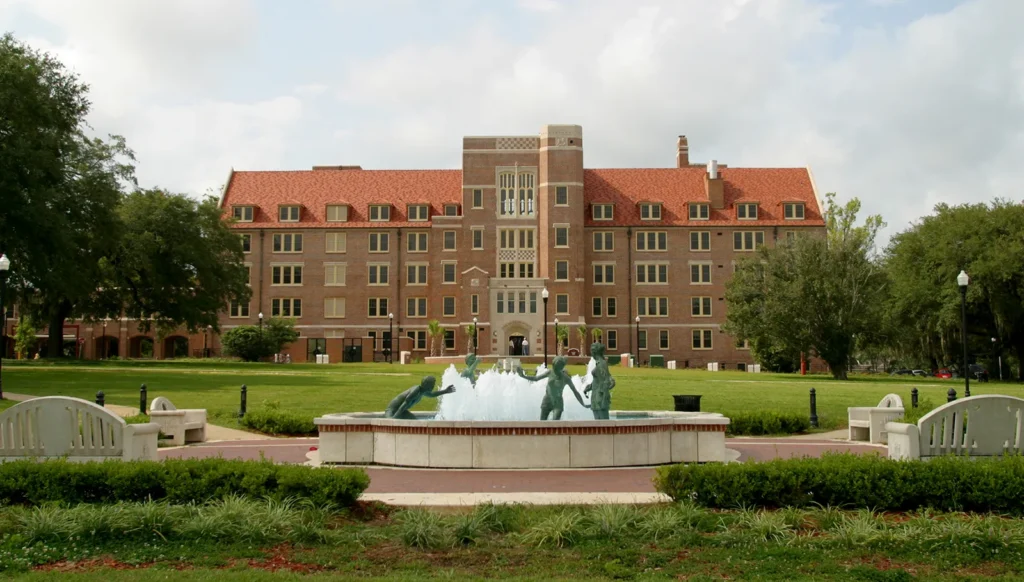
FSU’s social work program has a rich legacy that goes back to the 1920s. The program began its journey with Dr. Raymond F. Bellamy, a sociology professor who served from 1918 to 1956. He brought social welfare content into the university’s curriculum. Dr. Coyle Moore joined the sociology faculty in 1928 and started teaching courses aimed at students who wanted to pursue social work careers.
The mid-1930s saw the program grow during the Great Depression. New undergraduate courses in casework and group work became part of the curriculum. Students gained hands-on experience through field placements at the Leon County Welfare Association and the Leon County Unemployment Relief Council. These early steps built the foundation for what grew into one of America’s most respected social work education programs.
The program’s growth from a small department to a full college spans almost 100 years. The Council on Social Work Education (CSWE) gave its original accreditation to the M.S.W. degree program in 1950. The baccalaureate program earned its accreditation in 1974, making it one of the first CSWE-recognized programs. That same year brought another milestone – the Florida Board of Regents approved the Ph.D. program in social work and welcomed its first student that fall.
The program took a big step forward in 2005 by becoming the College of Social Work. This change meant more than just a new name – it showed how much the program had grown in reach, influence, and academic excellence over the years.
Today, the College of Social Work has a thriving academic community. About 300 undergraduates and 450 graduate students call it home. The college has 35 faculty members who bring their unique expertise to both teaching and research. The college’s intellectual environment benefits from 26 Ph.D. students who actively pursue their degrees.
A Dean leads the College with support from an Associate Dean for Research and an Associate Dean for Academic Affairs. Other faculty administrators oversee key areas like field education and various degree programs (BSW, MSW, and Ph.D.). Faculty committees handle most college operations, and student representatives join each committee to add different views.
Social work professionals dedicate themselves to making life better for people in various situations. FSU’s College of Social Work stays true to this mission. The college puts great emphasis on building a student body that values and reflects commitments to helping individuals, families, and communities.
The College provides complete education at several levels:
- Bachelor of Social Work (BSW): A 2-year, limited access program available at both the Tallahassee main campus and Panama City campus
- Master of Social Work (MSW): Available in multiple formats including:
- Traditional on-campus program (for students with non-social work bachelor’s degrees)
- Advanced-standing on-campus program (for students with BSW degrees)
- Traditional online program
- Advanced-standing online program
- PhD in Social Work: For students with an MSW seeking doctoral education
Students can specialize in Clinical Social Work or Social Leadership through the MSW program. The clinical track teaches students to provide therapy services, help clients access community resources, and evaluate social work practice. The Social Leadership track prepares graduates to use evidence-based practices in organizations and communities, readying them for policy and administrative roles in social agencies.
The college offers joint degree options with other departments. Students can combine their MSW with an MBA from the College of Business, an MS in Criminology, a JD from the College of Law, or an MPA from the Askew School of Public Administration.
The undergraduate curriculum gives students the tools they need for professional practice and graduate study. Students learn about human behavior, interviewing skills, assessment, social policy, research, and group work. This broad education opens doors to careers in family services, mental health care, child welfare, aging, health care, women’s services, chemical dependency, corrections, community organizing, and social policy.
The online MSW program is known for its quality and flexibility. The CSWE fully accredits this program, which lets students access lectures and complete assignments on their schedule while meeting deadlines. Students get preparation for the Association of Social Work Boards clinical examinations – a requirement for becoming a Licensed Clinical Social Worker.
Over the years, visionary leaders have shaped the College’s growth and influence. Their work has made FSU’s College of Social Work a place where academic excellence meets real-life impact, creating generations of professionals who drive positive social change.
Where is Florida State University located
Florida State University sits in the heart of Tallahassee, Florida’s capital city. The university spreads across a 486-acre campus and serves as the main hub for its educational programs, including its social work department. As Florida’s oldest continuous higher education site, the university traces its roots back to 1851.
The historic Westcott Building stands at College Avenue and S. Copeland Street. This landmark houses Ruby Diamond Concert Hall, the university’s main performance space. New visitors can start their campus tour at the FSU Visitor Center on the first floor of University Center Building B, south of Doak Campbell Stadium. You’ll find the Visitor Center at 288 Champions Way, Tallahassee, FL 32306.
Stadium Drive marks the western edge of FSU’s main campus, while Tennessee Street (U.S. Route 90), Macomb Street, and Gaines Street create its other boundaries. The FSU Student Union at 75 North Woodward Avenue serves as a central gathering spot for the university’s 32,720 undergraduate students (as of fall 2024).
Social work students will find their way around campus easily. The Institute offices are in Suite 010 of the Louis Shores Building (building 19 on the main campus map). The Shores Building sits at the southwest corner of Landis Green, right in the middle of FSU’s campus. This location gives social work students quick access to libraries, academic buildings, and student services.
FSU’s reach extends beyond its main campus throughout Florida and around the world. The university runs a satellite campus in Panama City, Florida, bringing education closer to panhandle students. It also manages the FSU Ringling Center for Cultural Arts in Sarasota, which serves as Florida’s state art museum among other cultural sites.
Students should note that Tallahassee uses Eastern Time, though some parts of the Florida Panhandle run on Central Time. This matters most to online MSW students who need to coordinate virtual meetings or keep track of assignment deadlines across different time zones.
FSU’s campus holdings go way beyond the main Tallahassee location. The university owns more than 1,715 acres of land outside Leon County. This land includes the 740-acre FSU Southwest Campus, which people used to call “The Farm,” located off Orange Drive. The university bought this property in 1930, marking a big step in its growth.
The Panama City campus, about 100 miles from the main location, offers several FSU programs including social work options. This campus gives students in northwest Florida a chance to get an FSU education without moving to Tallahassee.
FSU’s global education program ranks among the top 15 U.S. study-abroad programs, backed by over 50 years of experience. The university runs year-round study centers in:
- Panama City, Panama
- London, England
- Florence, Italy
- Valencia, Spain
Students can also choose from more than 40 programs across 20 locations in Europe, Latin America, and Asia. These international options are great for social work students who want to learn about different social welfare systems and cross-cultural practices.
The Tallahassee location puts students right where Florida’s political decisions happen. Social work students interested in policy advocacy, government relations, or public administration will find unique chances for internships and networking with state agencies.
FSU serves about 45,000 students through its 18 colleges, supported by more than 6,000 faculty and staff members. The university has built a strong reputation for excellence in sciences and humanities. Students love FSU’s friendly campus atmosphere, successful athletics programs, and its prime spot in Florida’s capital.
Social work students at FSU get the best of both worlds – resources from a major research university and hands-on learning in a diverse city. Whether they study in Tallahassee, Panama City, or online, students benefit from FSU’s strong infrastructure and smart campus design that creates a complete educational experience.
The FSU College of Social Work offers detailed educational paths from undergraduate to doctoral levels. The Council on Social Work Education (CSWE) accredits these programs. Students get ready for various social work roles through academic training and field experiences.
FSU’s Bachelor of Social Work (BSW) program runs at both the Tallahassee main campus and Panama City campus. Students need 50 credit hours in social work to graduate – 38 hours of coursework and 12 hours of field instruction. The field placement gives students 512 clock hours of supervised hands-on experience. Students can choose part-time or full-time study, though most classes happen during the day. BSW graduates can later join the accelerated MSW through the advanced standing program.
The Master of Social Work (MSW) program is Florida’s largest program of its kind. Students pick between Clinical Social Work or Social Leadership concentrations. Clinical concentration graduates provide therapy services, help clients access community resources, and evaluate practice interventions. The Social Leadership track prepares students for evidence-based practice in organizations and communities, leading to policy and administrative roles in social agencies.
Students can choose from several MSW program formats:
- Traditional MSW Program (Tallahassee Campus): Students with non-social work bachelor’s degrees need 61 credit hours and complete two internships totaling 944 field hours.
- Advanced Standing Program: BSW graduates from CSWE-accredited programs can finish with 39 credit hours and one 512-hour internship.
- Panama City Campus Program: Students move through this program as a cohort over six semesters, focusing on Clinical Social Work.
- Online MSW Program: One of the nation’s first online MSW programs qualifies graduates for licensure. Traditional online students finish in three years, while advanced standing students typically need two years.
FSU also offers joint graduate degrees: MSW/MBA with Business; MSW/MS with Criminology; MSW/JD with Law; and MSW/MPA with Public Administration.
The PhD in Social Work focuses on research methods and teaching. Students attend classes in person at the Tallahassee campus and prepare for academic careers through coursework and scholarship opportunities. Faculty members mentor doctoral students closely, and third-year students gain teaching experience through a practicum. The program’s success shows in its numbers – 63% of graduates in the last five years earned tenure-track positions, while 21% secured university research positions nationwide.
FSU’s certificate programs focus on specific social work areas:
- Child Welfare Practice Certificate: Undergraduate and graduate students learn about child welfare practice and children’s mental health. Professionals with one year of child welfare experience can pursue this certificate without seeking a degree.
- Gerontology/Aging Studies Certificate: This program ends in Fall 2025 and no longer accepts applications. Current students can still finish their requirements.
- Leadership in Executive and Administrative Development (LEAD) Certificate: Students learn leadership theories and gain practical experience. The program covers leadership, decision-making, client-centered management, team building, negotiating, budget and finance, and grants management.
The College’s student body includes about 300 undergraduates and 450 graduate students. A team of 35 full-time and 16 part-time faculty members teaches these students. The diverse student population breaks down as 59% White or Caucasian, 20.73% Black or African American, 13.92% Hispanic/Latino, with other racial/ethnic groups making up smaller percentages.
Field education remains the foundation of FSU’s social work curriculum. Students get supervised practical experience that connects classroom learning to real-life application. This approach has made FSU a leader in preparing ethical practitioners for social work roles.
Field education at FSU
Field education is the substance of professional social work training at Florida State University. Students get hands-on experience that connects classroom learning with ground practice. Social work educators often call these supervised experiences the “signature pedagogy” because students apply theoretical knowledge while becoming skilled at essential professional work under experienced practitioners’ guidance.
BSW students finish their field instruction in their final semester. They must spend 32 hours per week at an agency placement for a minimum of 512 clock hours to earn 10 credit hours. Students work with individuals, families, groups, and communities during this placement. The generalist practice model learned in class comes alive through practical application in a variety of agency settings.
MSW program requirements change based on your track. Second-year and Advanced Standing students need 512 hours per semester when studying full-time. Part-time students must complete 256 hours per semester. First-year MSW students have different requirements – 432 hours per semester for full-time or 216 hours for part-time study.
Students must meet several criteria to start field work:
- Completion of all required social work courses
- Resolution of any incomplete grades
- Achievement of a 3.0 grade point average in social work courses
- Clearance through academic advisement to ensure proper course sequencing
The Office of Field Education carefully matches students with agencies based on their concentration area, learning needs, and available supervision. Field placements exist in agencies of all types across Florida and beyond. Students can filter options by practice area (from acute medical care to youth services) and location. This careful matching process gives students experiences that line up with their career goals and learning objectives.
Professional supervision is a crucial part of FSU’s field education. Students meet with their field educator for formal supervision at least once weekly (full-time internships) or biweekly (part-time internships). This mentoring relationship gives essential guidance, feedback, and professional growth needed to develop social work competencies.
The program maintains high evaluation standards. Students receive formal assessments at mid-term and completion of their internship. These evaluations measure various competencies on a 1-5 scale, with 3 as the expected performance level. Students must submit three evaluations to complete field education, including their self-assessment and supervisor evaluations.
FSU offers specialized internship options like the Multidisciplinary Center (MDC) program. This graduate-level chance lets students gain direct clinical experience under licensed clinical social worker supervision. MDC interns learn to conduct clinical assessments, including biopsychosocial and adaptive measures with parents and guardians. They also work on individual and group mental health services, intake assessments, treatment planning, and clinical documentation.
Students interested in global perspectives can choose international field placements in the United Kingdom, Republic of Ireland, and Canada. These unique experiences help students understand host cultures and learn about social welfare services abroad. Planning starts three semesters before eligibility, but these experiences are a great way to get cross-cultural competencies that boost professional practice.
A detailed field education calendar shows key dates and deadlines for applications, planning meetings, and evaluations. Students planning Fall 2025 field placements should mark dates like the Field Expo on September 12 (10:30 am – 1:00 pm) and application deadlines.
Students develop nine core competencies outlined by the Council on Social Work Education during their field experience. These skills range from ethical and professional behavior to practice evaluation with various client systems. Students and field educators work together to create an Educational Plan that guides the learning process.
The Bureau of Labor Statistics shows employment for social workers will grow 7 percent from 2023 to 2033, faster than other occupations. This growth highlights FSU’s detailed field education program’s value. Through strategic placements, quality supervision, and continuous evaluation, FSU graduates enter the workforce with competencies needed for successful careers in social work agencies of all types.
What sets Florida State University apart?
FSU College of Social Work stands above its peers through its prestigious accreditations, groundbreaking research, and innovative programs that prepare graduates to succeed in their careers. U.S. News & World Report ranks it in the Top 12% of Best Social Work Schools for 2024. On top of that, Forbes Advisor named its online MSW program as the Best Online MSW Program of 2023.
Quality education at FSU rests on strong accreditation. The Southern Association of Colleges and Schools accredits the institution. More significant to social work students, the Council on Social Work Education Board of Accreditation certifies all academic programs (BSW, MSW, PhD). This credential ensures high-quality instruction and competent graduates.
FSU’s excellence stems from its remarkable faculty. The college features “world-class faculty, state-of-the-art researchers, and student-centered staff” who build an “energizing and ethical learning ecosystem”. Faculty members have earned prestigious recognition as “named prominent scientists at national academies, the Society for Social Work and Research fellows, Rhodes Scholars, and other national and international honors”.
Research excellence defines FSU College of Social Work’s identity. The institution aims to “conduct research that transforms and impacts the lives of individuals, groups, families, and communities”. This dedication to creating real-life change includes students at every level. The college proudly states that “BSW, MSW, and PhD students are valuable partners and collaborators in the FSU College of Social Work research”.
FSU made history as the first CSWE-accredited institution to offer an online MSW program. This innovative spirit continues today. Advanced standing students can complete their program entirely online without campus visits. Traditional program students need to attend just two weekend skill-building sessions on campus.
Students receive dedicated support through well-designed systems. Online learners get mentorship and guidance throughout their educational experience, which builds connection despite physical distance. A Student Success Advisor helps each student “at every point through the program, from online enrollment to field placement support”.
Program quality shines through FSU’s impressive outcomes. The university broke its previous records with a 97% first-year retention rate, 86% six-year graduation rate, and 78% four-year graduation rate in 2025. Doctoral graduates now work at prestigious institutions like the University of Houston, University of Kentucky, Temple University, and many others.
The college balances academic rigor with hands-on experience. Faculty members believe in “a diverse approach to research, using a wide range of research methods to address the important social problems facing our communities”. Students benefit from a curriculum “structured around translational research and evidence-based practice”.
Strong community ties set FSU apart. Their materials highlight that “What starts in our classrooms and research centers and institutes extends to enriching field placements and tailored professional growth that transforms into regional and global impact”. The college’s “alumni throughout the state and around the globe” create “a strong network of supporters and mentors ready to welcome our recent graduates”.
FSU offers great value compared to similar programs. Kiplinger Personal Finance ranks it among the Top 25 Best Value Social Work Programs. Florida residents benefit from lower in-state tuition rates.
The college’s warm, collaborative environment makes it unique. Students learn in “a warm, caring, collaborative environment”. This supportive atmosphere extends online, where “extra effort and expert instructors working in an online setting” create a unique experience.
FSU’s social work program builds an inspiring community dedicated to positive change. The college has “a student body comprised of passionate change-makers committed to serving others”. This community shares “a common path as trailblazers and social workers united in our efforts to change lives and leave the world a better place”.
Students looking at their options will find FSU College of Social Work offers an exceptional mix of academic excellence, practical experience, supportive community, and innovative program delivery that makes it unique in social work education.
Next steps
Want to become part of FSU’s College of Social Work? The application steps change based on your program choice, and each path needs good preparation with close attention to deadlines.
BSW applicants need to submit applications to both FSU and the College of Social Work’s BSW program. The deadlines are June 1 for fall and November 1 for spring admission. You’ll get your admission decision within 30 days after completing your application.
Your BSW application checklist should include:
- Completed FSU university application
- Minimum of 60 credit hours of General Education studies
- Five prerequisite courses completed with grades of C or better
- Completed BSW application form
MSW applicants have different deadlines based on their program format:
- Tallahassee Campus (Traditional and Advanced Standing): May 1 (Fall), October 1 (Spring)
- Panama City Campus: July 1 (Fall only)
- Online Programs: March 1 (Summer), May 1 (Fall), October 1 (Spring)
International applicants should aim for the January 15 deadline for Fall.
MSW applications need several key pieces. You’ll need to write a statement of purpose that talks about your goals, experiences with different values, time management plans, and connection to social work values. Your professional resume should showcase relevant experience.
You’ll need three recommendation letters. These should come from work/professional and academic references. At least one academic reference is needed if you graduated within the last three years. Your recommenders will submit their letters through the application system.
The Office of Graduate Admissions needs official transcripts from all your previous schools. You can start the review process with unofficial transcripts, but you’ll need to submit official ones during your first semester if accepted.
Good news – you don’t need GRE scores for MSW admission. Students with a GPA below 3.0 can submit a “Petition for Exceptional Consideration” to explain why this requirement should be waived.
PhD applicants work with a different timeline. Applications open August 1, with a March 1 deadline. You should try to complete your application by December. The Doctoral Program Committee usually gives admission decisions within eight weeks after getting completed applications.
PhD applicants will either get denied or invited for an interview. After interviews, you’ll get one of three results: admit, deny, or waitlist. Waitlisted applicants will know their final status by May 1.
Meeting the basic requirements only gets you considered – it doesn’t guarantee acceptance. FSU’s selection process is competitive, so start early and pay attention to all application details to boost your chances of joining this outstanding social work program.