
Social Work Programs at University of Central Florida
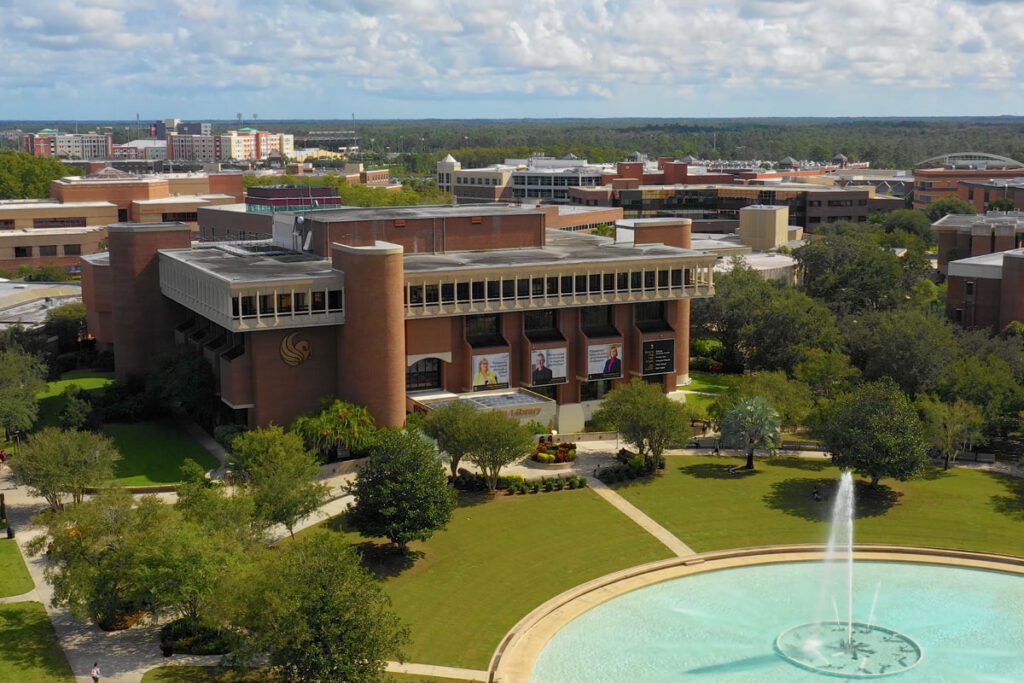
The School of Social Work at the University of Central Florida lights the way for people who want to change lives. This fully accredited institution offers bachelor’s and master’s degrees in social work. You’ll learn to meet human needs in many different settings.
About UCF
The University of Central Florida’s School of Social Work started in the 1960s as an undergraduate focus within the Department of Sociology at the College of Social Sciences. The program grew into what it is today and received its first national accreditation from the Council on Social Work Education. Now it is a cornerstone of social work education.
UCF’s School of Social Work has a clear purpose: to push forward inclusive social work that promotes physical and behavioral health, social justice, and human rights. They do this through impactful research, education, and community work. The school aims to make our diverse society better with skilled social workers and groundbreaking research. This will boost health and well-being for people, groups, and communities throughout their lives.
The Bachelor of Social Work (BSW) and Master of Social Work (MSW) programs at UCF have full accreditation from the Council on Social Work Education’s Board of Accreditation. This accreditation will give you an education that meets national excellence standards and prepares you for professional licensing.
The BSW program gives you skills to become a generalist social work practitioner. You’ll learn to design and deliver social services in organizations of all sizes, including healthcare settings. Social work ranks among the fastest-growing jobs in the United States. The degree opens doors to meaningful work with many opportunities. You’ll study human behavior, social environment, social welfare policy and services, research, and social work practice.
The MSW program helps you become a licensed clinical social worker (LCSW). You’ll be able to provide mental health services to individuals, families, and groups. Students learn both general and advanced clinical social work. They become skilled at using evidence-based clinical practice to help people with health and mental health challenges.
UCF offers different ways to get your social work education. The MSW program has several tracks that fit various schedules and needs:
- An advanced standing track if you have a BSW degree from an accredited program in the last six years
- A traditional track if you have a bachelor’s degree in another field
- Both online and in-person classes
The BSW program limits enrollment and needs a separate application, usually after your second college year. This selective process makes sure students align with the profession’s values and can handle its demands.
UCF’s social work programs stand out because they blend hands-on practice with classroom learning. Field education plays a key role in both programs. Students work under professional supervision to gain real experience. BSW students finish with a 420-hour internship at a community organization, averaging 28 hours weekly.
The School of Social Work champions diversity and inclusion. A recent graduating class showed that nearly one-third were first-generation college students. Students can choose between campus-based and online MSW programs, making graduate education more available.
On top of that, the MSW program got ranked among the best social work programs by U.S. News & World Report. This puts it in the top 30 percent nationwide.
Students can add to their education through special learning options. BSW students can earn certificates and minors in:
- Aging Studies (Certificate or Minor)
- Children’s Services Certificate
- Nonprofit Management Minor
- Spanish for Social Work Certificate
MSW students can pursue unique options like the Military Social Work Graduate Certificate. This helps them better serve active military members, veterans, and their families.
Students can work with faculty as Research Assistants at the Center for Behavioral Health Research and Training. They learn from experts in suicide prevention, substance abuse, refugee mental health, and aging.
Greater Orlando offers a perfect setting for social work education. Students build strong connections with local agencies and work in diverse urban areas while having nature nearby. This mix creates an ideal place to grow as a social work professional.
The program follows the National Association of Social Workers (NASW) Code of Ethics throughout its courses. These ethical foundations prepare you for more than just a job – they lead to a rewarding career where you’ll promote social change and help others succeed.
Where is University of Central Florida located
The University of Central Florida sits in the heart of the Sunshine State, offering a vibrant setting for your social work education. UCF’s main campus creates an energetic atmosphere in east Orlando, where academic excellence meets real-life opportunities.
UCF’s main campus spans over 1,400 acres of land, unlike many urban universities with limited space. This vast area provides plenty of room for cutting-edge facilities, including the University of Central Florida school of social work. Students enjoy a distinct campus community just 13 miles east of downtown Orlando, keeping urban resources within easy reach.
The School of Social Work calls the Health and Public Affairs building home on the main campus. This location encourages cooperation between social work students and others studying related fields like public administration, criminal justice, and health sciences. The setup reflects actual work environments where social workers team up with professionals from many disciplines.
UCF’s downtown presence adds extra value for social work students. The UCF Downtown campus opened in 2019 through a partnership with Valencia College and serves as an urban innovation center. This spot puts university of central florida masters in social work students close to many social service agencies, healthcare facilities, and government organizations—perfect for field placements and future jobs.
The downtown campus covers 68 acres in Orlando’s Creative Village. Its design blends education, work, and community life. Social work students get a unique chance to work with different populations and tackle community challenges right outside their classrooms.
Orlando provides the perfect backdrop for social work education. As Florida’s fourth largest city, it offers both urban and suburban experiences. The city’s role as an international tourist destination creates a remarkably diverse population. Social work students meet people from different cultures, economic backgrounds, and languages—exactly what they’ll see in their future careers.
The Central Florida region around UCF has a mix of urban centers, suburban communities, and rural areas. Students can complete field placements in various settings, from big city hospitals to small community organizations serving rural populations. They gain complete experience with different client groups before graduating.
Getting around is easy at UCF. The campus links to Orlando’s transportation network through:
- UCF shuttle services running throughout the main campus and to nearby student housing
- LYNX bus service connecting UCF to greater Orlando
- SunRail commuter rail service you can reach by shuttle
These options help social work students get to field placements without needing cars. The Orlando International Airport sits about 20 miles from campus, making travel convenient for out-of-state or international students.
The weather sets UCF apart too. Central Florida’s warm climate creates year-round chances for outdoor activities and community work. The weather also brings unique social challenges, like managing emergencies during hurricane season and helping vulnerable people during heat waves. Future social workers learn valuable lessons from these situations.
Florida’s healthcare landscape gives social work students interested in health and behavioral health extra advantages. The state faces big challenges with its aging population, substance abuse issues, and gaps in mental health services. UCF’s position creates many meaningful field experiences to address these pressing issues.
Students can choose from various housing options near UCF that fit different budgets and priorities. The campus has traditional dorms and apartment-style living spaces. Many off-campus developments cater to UCF students. These choices work well for both undergraduates and working professionals pursuing advanced social work degrees.
The area around UCF has many resources that benefit social work students:
- Public libraries with study spaces and research materials
- Parks and recreational facilities to maintain work-life balance
- Cultural venues hosting diverse events and shows
- Religious organizations representing many faiths and traditions
These amenities make life better while helping students understand community systems—a key part of social work practice.
The local economy adds to UCF’s appeal. Orlando’s diverse job market includes tourism, healthcare, technology, and education. Social work graduates find jobs in hospitals, community agencies, and corporate employee assistance programs. Florida’s zero state income tax helps students manage their education costs.
Students interested in university of central florida social work programs will find plenty of networking opportunities. Orlando hosts many professional associations and community events where students meet practicing social workers. These connections often lead to mentorships, field placements, and jobs.
Online learning options extend UCF’s reach beyond Orlando. While maintaining strong local ties, the university offers online social work programs you can access from anywhere. Even online students benefit from UCF’s location through campus visits and local field placements.
UCF’s location creates an ideal learning environment for both undergraduate and graduate social work education. Central Florida offers the perfect mix of academic resources, diverse communities, and professional opportunities to help you become a skilled, culturally aware social worker ready to tackle complex human needs.
UCF offers a complete social work education through two main degree programs. These programs will prepare you for different levels of professional practice. You can start with entry-level positions and progress to advanced clinical roles. UCF’s social work programs lay the groundwork for a rewarding career serving people from all backgrounds.
The Bachelor of Social Work (BSW) program equips you with generalist practice skills to assess and help clients in various settings. You’ll learn to improve client quality of life and advance social justice principles through evidence-based interventions. The BSW curriculum teaches human behavior, social environment, welfare policy, research methods, and practical applications.
Note that the BSW is a limited-access program. You’ll need to submit a separate application after your second year of college. The admission requirements are:
- Completion of an Associate of Arts degree or UCF General Education requirements
- A minimum 2.5 GPA on a 4.0 scale
- Completion of at least two program prerequisites (biology, psychology, sociology/social problems, and American national government)
- Submission of the BSW application online
The BSW program lets you explore specialized elective options. You can choose from areas like child welfare, addictions, aging studies, health services, immigration, and LGBTQ+ populations. These electives help you focus your education on specific practice interests.
The Master of Social Work (MSW) program prepares you to become a licensed clinical social worker (LCSW). You’ll be qualified to provide mental health services to individuals, families, and groups. The program ranks in the top 30 percent of social work programs nationwide by U.S. News & World Report.
UCF’s MSW program offers flexibility through several track options that fit different educational backgrounds and schedules:
- Traditional Track – For students with bachelor’s degrees in fields other than social work
- Advanced Standing Track – For students with a BSW from a CSWE-accredited program earned within the last six years and a 3.3 GPA in the last 60 credit hours
- Campus-Based Track – In-person learning experience in Orlando
- Online Track – Distance education with asynchronous coursework
Your selected track determines the credit requirements. The traditional MSW needs 62 credits over three years, while the advanced standing option takes 32 credits in 16 months. This streamlined path recognizes your prior social work education and reduces redundancy for qualified BSW graduates.
UCF’s online MSW program maximizes convenience. Students take one asynchronous course at a time during 7-week terms. Working professionals can balance their education with personal and work commitments easily.
The Council on Social Work Education (CSWE) fully accredits both BSW and MSW programs at UCF. This accreditation means your education meets national standards for professional practice. The MSW program also meets all educational requirements to become a Licensed Clinical Social Worker (LCSW) in Florida.
The BSW creates generalist practitioners who can design and deliver social services in various practice settings. The MSW builds both generalist and advanced clinical skills. It emphasizes evidence-based practice to promote optimal well-being in individuals, families, and communities facing health and mental health challenges.
Students in the online MSW program can specialize in Behavioral Health or Child Welfare Services. These high-demand areas match critical needs in Florida’s social service landscape.
Program deadlines vary by track. Campus-based MSW priority deadlines are January 15 for fall admission and July 1 for international applicants. The online MSW accepts applications for multiple start dates: June 1 (fall priority), November 1 (spring), and March 1 (summer). Multiple entry points throughout the year give you flexibility in starting your education.
UCF’s School of Social Work shows steadfast dedication to academic excellence and practical preparation. Students become successful practitioners who promote optimal well-being, human rights, and social and economic justice. This mission runs through every aspect of the curriculum, from classroom instruction to field experiences.
You can earn specialized certificates to boost your professional credentials. Options include Aging Studies (available online), Military Social Work, Children’s Services, Spanish for Social Workers, and Social Work and the Law. These certifications complement your degree and show focused expertise to employers.
UCF’s social work programs give you a complete education for practice settings like healthcare, schools, child welfare, criminal justice, and more. Social work ranks among the fastest-growing professions in the United States. The field offers meaningful career opportunities that affect individuals and communities directly.
Field education at UCF
Field education is the backbone of social work training at University of Central Florida. Many call it the “signature pedagogy” of social work education. This hands-on component connects classroom theory with real-life practice and gives you supervised experience in professional settings.
UCF’s school of social work makes field education a key part of both BSW and MSW degrees. You’ll put theoretical concepts to work in actual practice settings through carefully picked placements. Expert guidance helps you build critical professional skills.
BSW students finish with a 420-hour internship (about 28 hours weekly) in their final semester(s). You can arrange this extensive practicum full-time or part-time, based on your schedule and what your placement site needs.
MSW students have tougher field requirements that change based on their program track:
- Advanced Standing students need a 600-hour clinical internship
- Traditional MSW students (Full-time/Part-time) must complete 1000 total hours split between:
- 400 hours of generalist internship
- 600 hours of clinical internship[103]
These placements help you develop key competencies set by the 2015 Educational Policy and Accreditation Standards (EPAS). Your field experience gets systematic design, supervision, coordination, and evaluation based on how well you master these professional skills.
UCF’s masters in social work program carefully plans field education throughout the curriculum. Full-time MSW students spend two back-to-back semesters in generalist field education. Clinical field education also takes two semesters with at least 300 clock hours each term. Whatever your program track, you’ll need to complete at least 50% of your internship hours during regular business hours[103].
The Field Education Office at UCF follows high professional standards set by the National Association of Social Workers (NASW) Code of Ethics. The Council on Social Work Education fully accredits this office. They work with more than 800 agency partners to give quality field education experiences in various settings. These community partnerships let you gain experience in different specializations.
Finding the right field placement takes careful matching. The Field Education Office picks appropriate agencies based on your educational needs. Field instructors at these sites play a vital role in teaching and supporting you as you use classroom knowledge in real practice.
Getting field placements means following set protocols. Students shouldn’t contact agencies on their own – they need to work through the Field Education Office. Field faculty reach out to potential placement sites to check specific learning opportunities that match program goals.
UCF boosts field education with integrative seminars that run alongside your internship[104]. These seminars meet every other week, either face-to-face or online, and focus on specific practice skills. Generalist seminars cover basic skills, while clinical seminars tackle advanced work with individuals, families, and groups.
The 50/50 Peer Advisor Program shows UCF’s innovative approach to supporting field education. MSW peer advisors team up with BSW and MSW students starting field placements. These peer mentors work under faculty supervision to give educational, emotional, and practical help as you direct your internship. This program builds supportive networks among student groups.
Graduate social work education is demanding at UCF. A typical full-time student spends about 12 hours in class, 24 hours preparing outside class, and 15 hours doing internship activities[103]. The program warns students about taking outside jobs with this heavy workload.
Evening (after 5pm) and weekend placements are hard to find[103]. UCF can’t promise these special schedules to students who need them. This policy matches how real agencies work and makes sure you get good supervision.
You’ll have malpractice insurance coverage from UCF during your field education. This protection covers your internship activities, letting you develop professional skills with peace of mind.
Field education at UCF gets you ready for professional practice by linking classroom knowledge with practical experience. This hands-on learning shapes you into a skilled, ethical practitioner ready to help people from all walks of life.
What sets University of Central Florida apart?
The University of Central Florida’s social work programs stand out from their peers with several unique features beyond their well-laid-out curriculum and strategic location. National organizations have recognized the quality education UCF provides.
UCF’s School of Social Work has earned substantial national recognition for its academic excellence. U.S. News & World Report ranked UCF’s social work graduate program at No. 79 nationally, placing it in the top 27th percentile among evaluated programs. This prestigious ranking came from peer assessment surveys sent to deans, administrators, and faculty at 296 accredited social work programs across the country.
Education for all serves as the core of UCF’s values. Nearly one-third of recent graduates were first-generation college students. This commitment shows in the program’s design too. The university offers both fully on-campus and online program options because they know graduate students need flexible schedules.
The UCF Master’s in Social Work program offers unique learning opportunities. The Military Social Work Graduate Certificate is one standout feature that helps active and veteran military personnel and their families. This specialization meets a crucial need in Florida’s large military community.
Students who want to pursue research careers can work with faculty at UCF’s Center for Behavioral Health Research and Training. You can join as Research Assistants or Graduate Research Assistants to learn about important studies. The faculty’s expertise covers:
- Suicide prevention
- Substance abuse
- Violence against women
- Aging and older adults
- Refugee mental health
UCF’s field education has a special advantage – qualifying students are guaranteed placement. Many other social work programs leave students to find their own internships. UCF’s field education office matches you with internships that line up with your career goals in settings like hospitals, schools, police departments, and nonprofit organizations.
The online MSW program uses a cohort model to encourage a supportive learning community in the virtual space. Students take courses in seven-and-a-half-week terms and focus on one subject at a time. Working professionals find this structure helpful when they balance education with their jobs.
Student diversity makes the educational experience richer. Recent graduating classes showed about 89% women and 11% men in both BSW and MSW programs. These numbers reflect the social work profession’s typical gender distribution while maintaining different viewpoints.
UCF keeps its programs affordable. Florida residents paid about $212.00 per credit hour for undergraduate courses in 2022-2023, while out-of-state students paid around $749.00 per credit hour. Both rates are lower than many private institutions with similar programs.
The curriculum teaches culturally responsive practice from regional, national, and global views. Students learn to work effectively with diverse populations and support marginalized communities. The program emphasizes research-informed practice so graduates can use evidence-based interventions in all types of settings.
UCF’s social work programs have built strong partnerships with local agencies throughout Central Florida. These connections improve field education and often lead to jobs after graduation. Many alumni work at organizations like:
- Central Florida Behavioral Hospital
- Orlando Health
- Orange/Seminole County Public Schools
- Embrace Families
- AdventHealth
- United Way
- Jewish Family Services
Greater Orlando becomes part of your learning experience. The area offers more than just theme parks – it’s a diverse community with many chances to work with different populations. Students develop cultural competence through community work and regular coursework.
UCF’s social work programs combine academic excellence, hands-on experience, and community involvement to prepare you for successful professional practice in all types of settings.
Next steps
Starting your social work trip at UCF? Your program choice determines the application process, but undergraduate and graduate paths share one goal – finding motivated candidates who want to make a difference.
Smart timing of your application boosts your admission chances. UCF suggests new first-year students should apply between September and November of their high school senior year when planning to start the following summer or fall semester. Early applications give you better shots at scholarships and housing options.
The BSW program needs three main steps:
- Prepare your Professional Statement
- Secure a Letter of Recommendation ready for upload
- Complete the application form in its entirety
The BSW application must be finished in one sitting because the system won’t save your progress between sessions.
MSW program deadlines change by track, so check the UCF School of Social Work website for exact dates. You need to complete coursework in four areas with C grades or higher: humanities, physical and biological sciences, mathematics, and social sciences.
Your GPA in the last sixty credit hours must meet specific requirements—3.3 for advanced standing and 3.0 for traditional tracks. The program includes field education: 1,000 hours across two placements for traditional students or 600 hours for advanced standing students.
Transfer students thrive at UCF. U.S. News & World Report shows more students transfer to UCF than any other university nationwide. DirectConnect to UCF guarantees admission for students earning an A.A. or articulated A.S. degree from partner institutions.
The online MSW program runs 7-week terms where students focus on one asynchronous course at a time. This setup creates manageable learning blocks that work well with other life commitments.
UCF offers more than 137 master’s, specialist, doctoral, and certificate programs for those looking beyond the MSW. The university’s Office of Transfer and Transition Services helps ensure a smooth transition for new students.
MSW students have several funding options. The School of Social Work gives promising full-time students $10,000 fellowships for tuition and fees each year. Students need a 3.5 or better GPA to qualify, and applications open at the start of each spring term.
You can find all application requirements and program details on the UCF website or ask the School of Social Work directly. UCF provides detailed support from application to graduation to help you succeed in social work.